Arizona’s buntings add tropical color and song to the state’s canyons and forests during spring and summer. The Indigo Bunting (Passerina cyanea) appears as a migrant or local breeder in southeastern riparian areas, the males shimmering electric blue in sunlight. The Lazuli Bunting (Passerina amoena) is more common, nesting in foothill scrub and open woodlands statewide. The Varied Bunting (Passerina versicolor), one of the Southwest’s jewels, inhabits desert canyons and thorny washes in southern Arizona, the male glowing in violet, red, and turquoise. Finally, the Painted Bunting (Passerina ciris), though rare, occasionally visits southeastern Arizona, where its rainbow plumage makes it one of North America’s most striking birds.
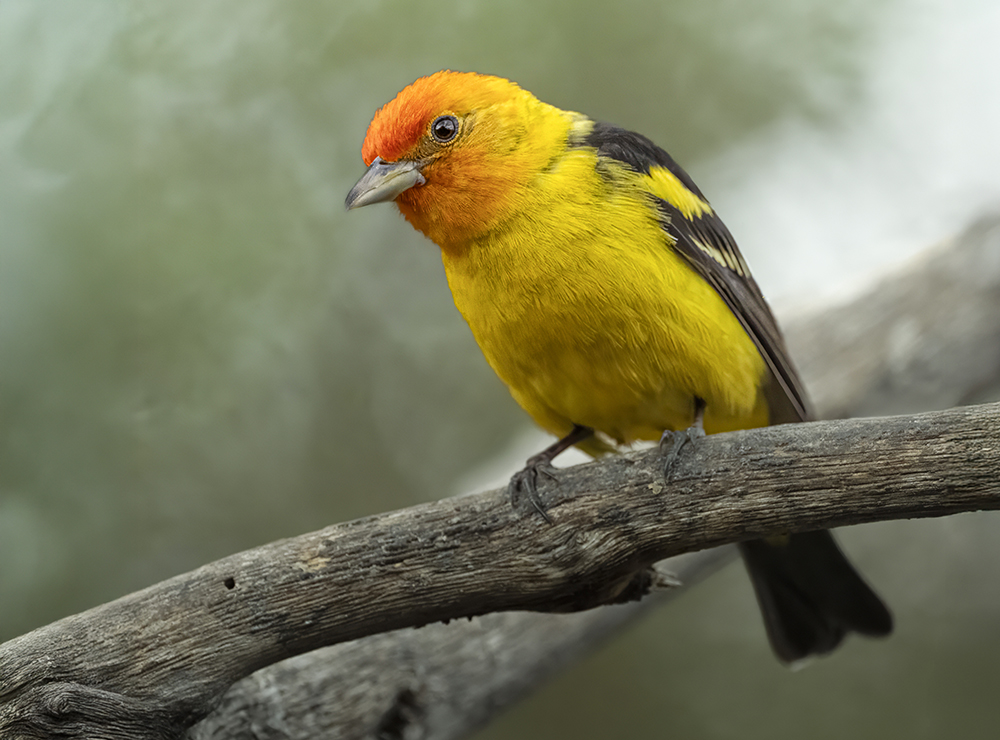
The tanagers add yet more brilliance. The Western Tanager (Piranga ludoviciana) is widespread, breeding in pine–oak and coniferous forests from the Mogollon Rim to the sky islands. Males are striking with yellow bodies, black wings, and a bright red head, while females are duller olive-yellow. Migrants pass through the lowlands in spring and fall, often stopping in gardens and riparian groves.
The Summer Tanager (Piranga rubra) is common in southern and central Arizona’s riparian woodlands, especially along the San Pedro and Santa Cruz Rivers. Males are entirely red, females yellow-green, and both feed actively on bees and wasps, often high in cottonwoods and sycamores.
The Hepatic Tanager (Piranga flava) is a regular breeder in the pine–oak woodlands of southeastern Arizona’s mountain ranges, including the Santa Rita Mountains and Madera Canyon. Males show a deep brick-red color with grayish flanks and back, and females are yellow-orange. Their mellow calls and steady presence are familiar to summer birders hiking among oaks and pines at mid-elevations.
The Dickcissel (Spiza americana), a grassland songbird of the central United States, is an uncommon but regular migrant or stray in Arizona. Most records occur in late spring or fall.