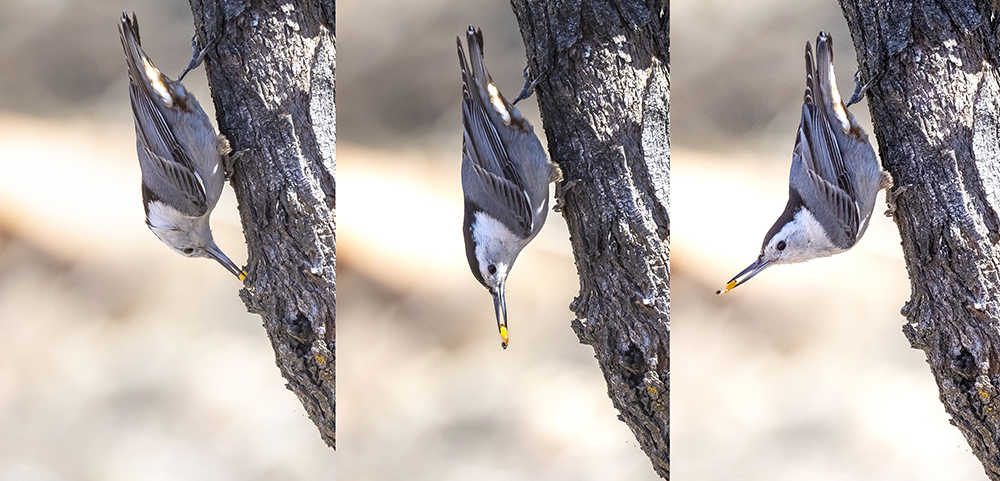
White-breasted Nuthatch
Arizona hosts a small but distinctive group of Nuthatches and Treecreepers, each adapted to the state’s varied mountain and woodland habitats. Among the nuthatches, the Red-breasted Nuthatch (Sitta canadensis) is a seasonal visitor to coniferous forests at higher elevations, where its nasal calls and upside-down foraging behavior make it conspicuous. The White-breasted Nuthatch (Sitta carolinensis) is the most widespread species in Arizona, inhabiting oak, pine, and mixed woodlands across much of the state. Its larger size, bold facial pattern, and habit of working down tree trunks headfirst distinguish it easily. The Pygmy Nuthatch (Sitta pygmaea), a social species, is common in ponderosa pine forests of the Mogollon Rim and “Sky Island” mountain ranges, often traveling in noisy flocks and nesting communally in cavities.
In contrast, Arizona supports only a single treecreeper, the Brown Creeper (Certhia americana). This inconspicuous woodland specialist is found primarily in coniferous forests of the higher elevations, where it spirals upward along tree trunks, probing bark crevices for insects with its slender downcurved bill. Its cryptic brown plumage blends almost seamlessly with the bark, making it far less obvious than the active, vocal nuthatches with which it sometimes shares habitat.
Together, these species highlight the diversity of foraging strategies in Arizona’s mountain forests—nuthatches moving headfirst down trunks and branches, and the Brown Creeper working its way upward—demonstrating different solutions to finding food in similar environments.