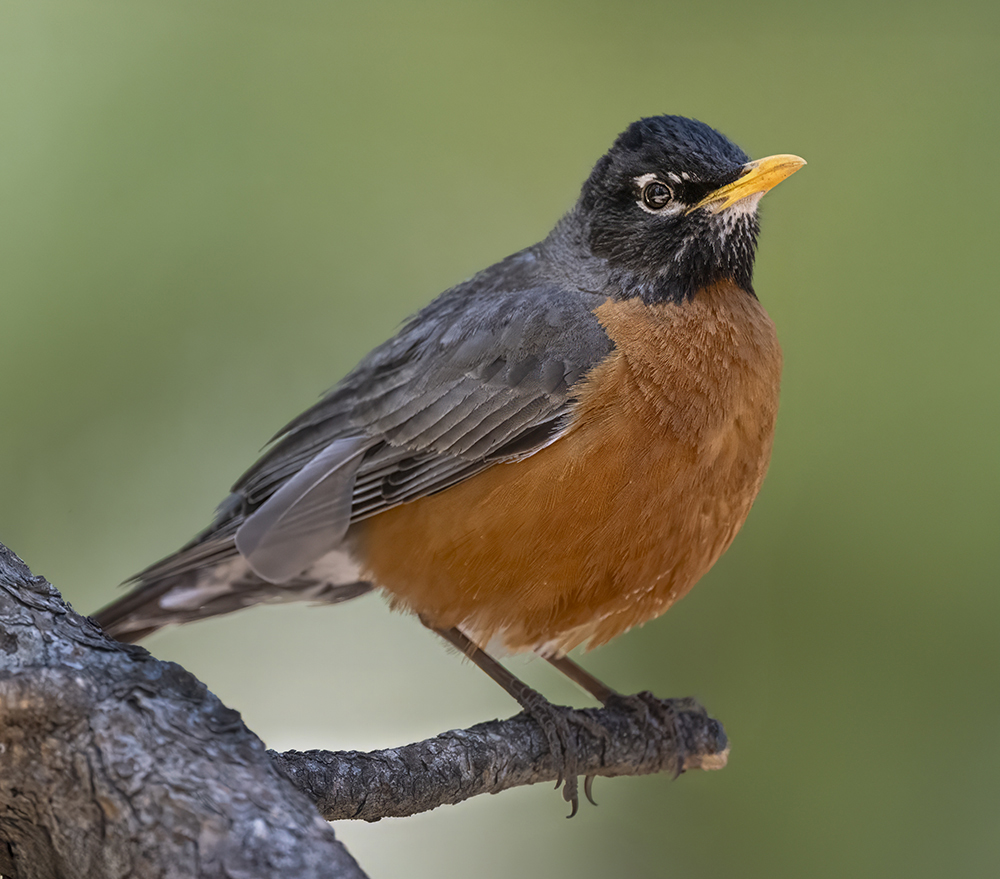
The American Robin is one of the most familiar and widespread songbirds in North America, and it is a common year-round resident across much of Arizona. Recognizable by its orange-red breast, dark gray back, and cheerful caroling song, this thrush thrives in a wide variety of habitats, from mountain forests and riparian woodlands to urban neighborhoods and backyards. In Arizona, robins are especially abundant in the cooler, higher-elevation areas of the Mogollon Rim, White Mountains, and Sky Islands, where they nest during spring and summer. Many also remain through winter, often forming large flocks that forage on berries, fruits, and insects.
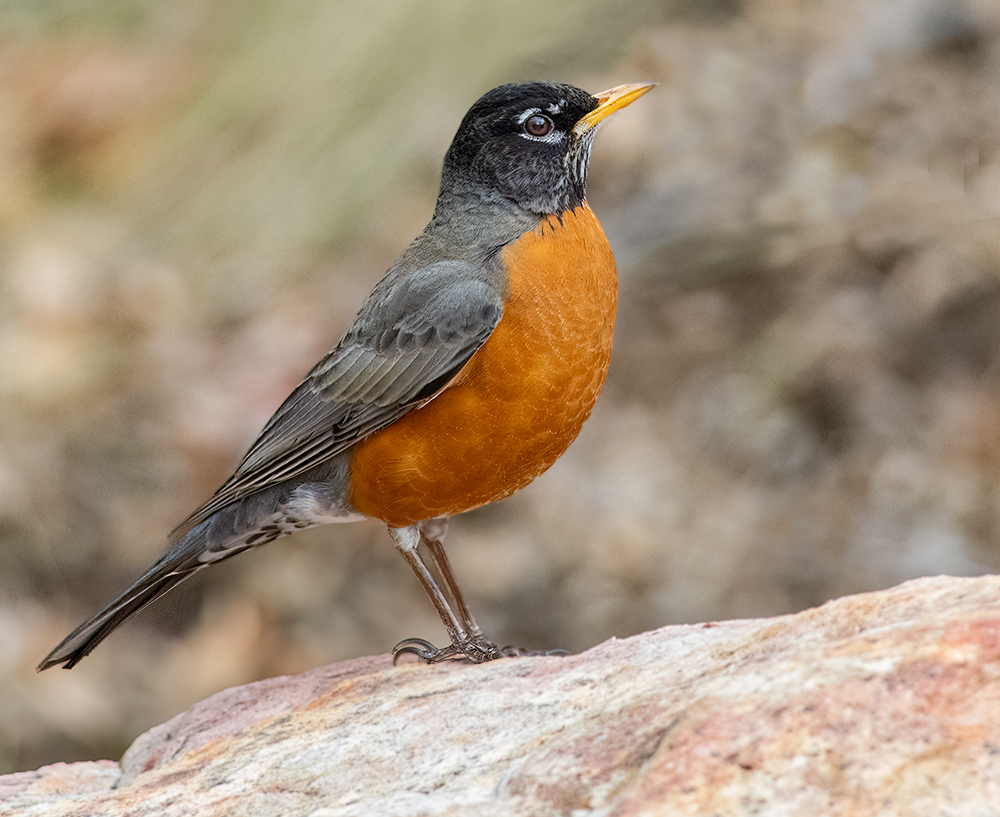
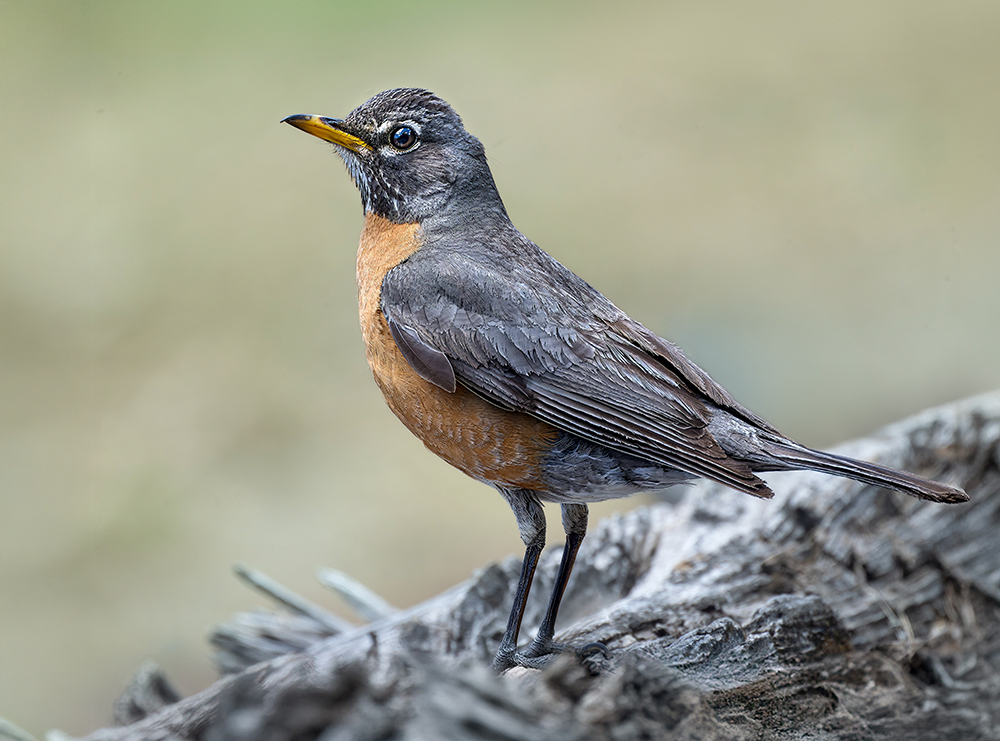
Female
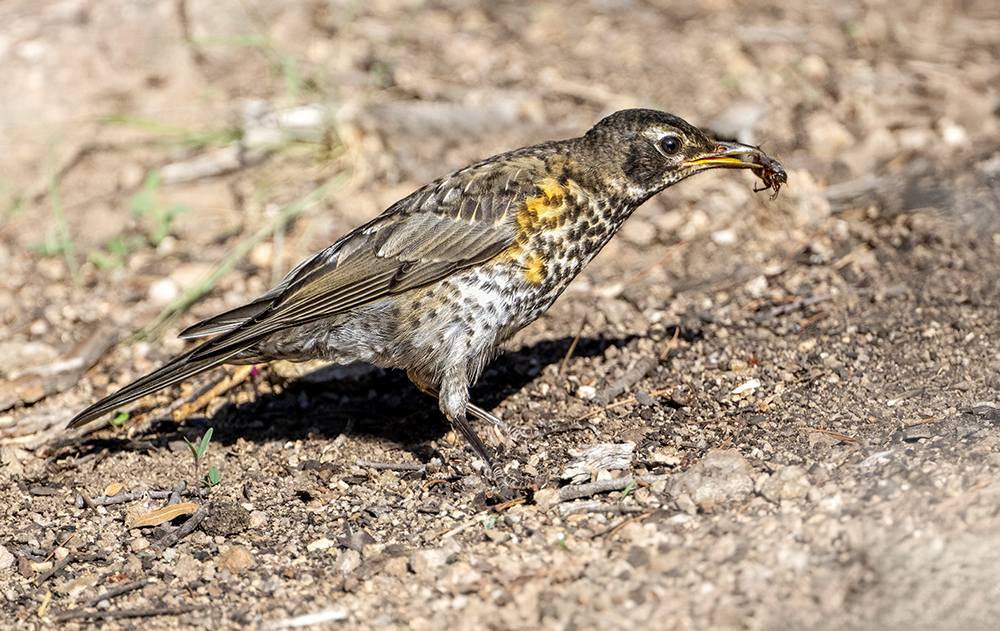
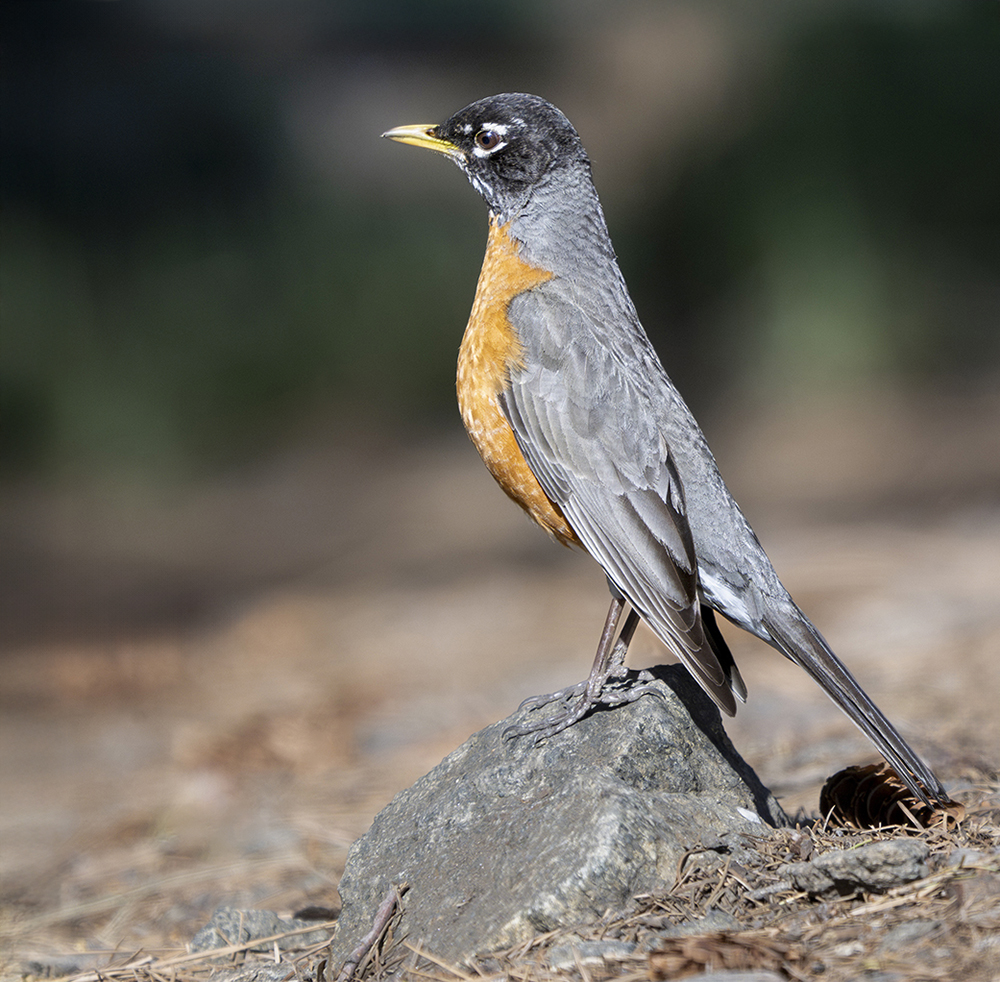
Juvenile
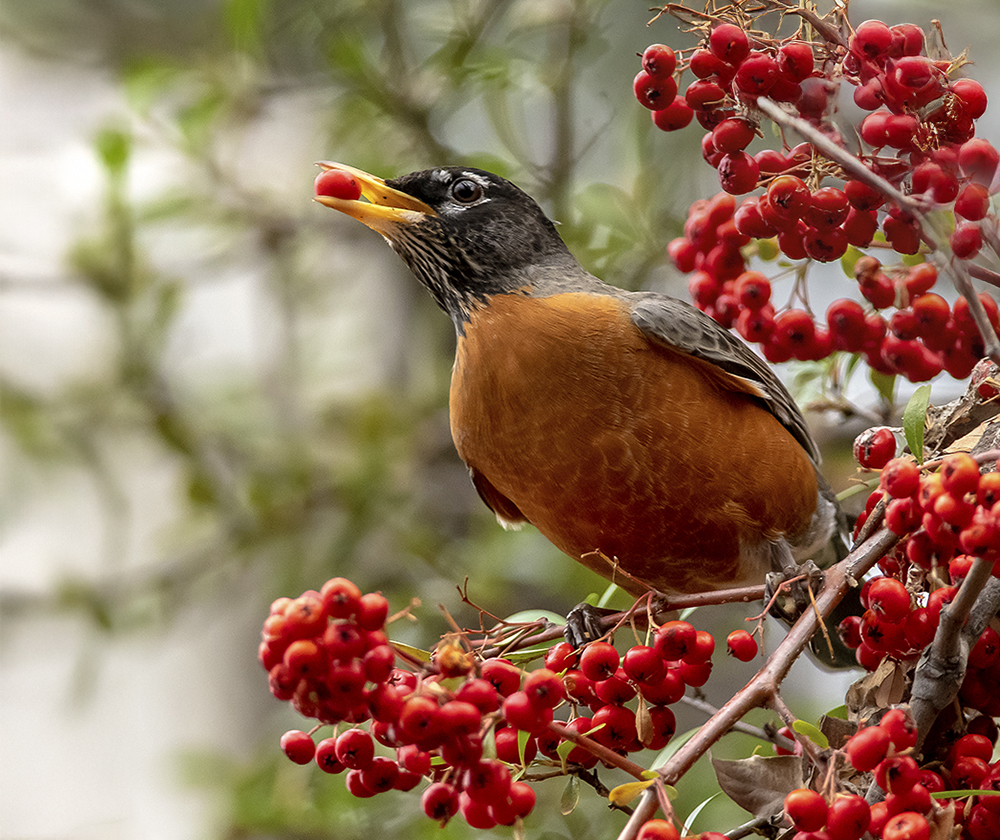
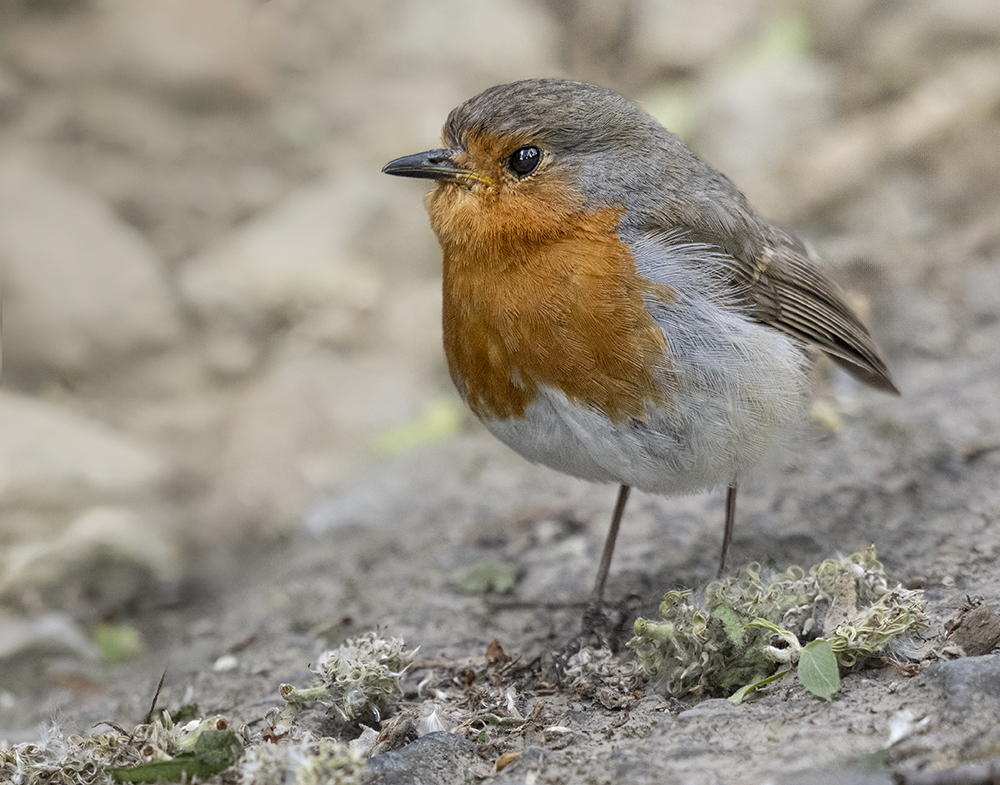
Eurasian Robin (Erithacus rubecula)
Although they share the name “robin,” the American Robin and the Eurasian Robin (Erithacus rubecula) are not related. The Eurasian Robin is not found in Arizona. The Eurasian Robin is much smaller, just 5–5.5 inches long, belonging to the Old World flycatcher family. Despite their shared name and red breast, the two “robins” evolved separately. The American Robin is closely related to other thrushes, while the Eurasian Robin is closer to nightingales and other flycatchers. Their resemblance is a case of convergent naming rather than close kinship.