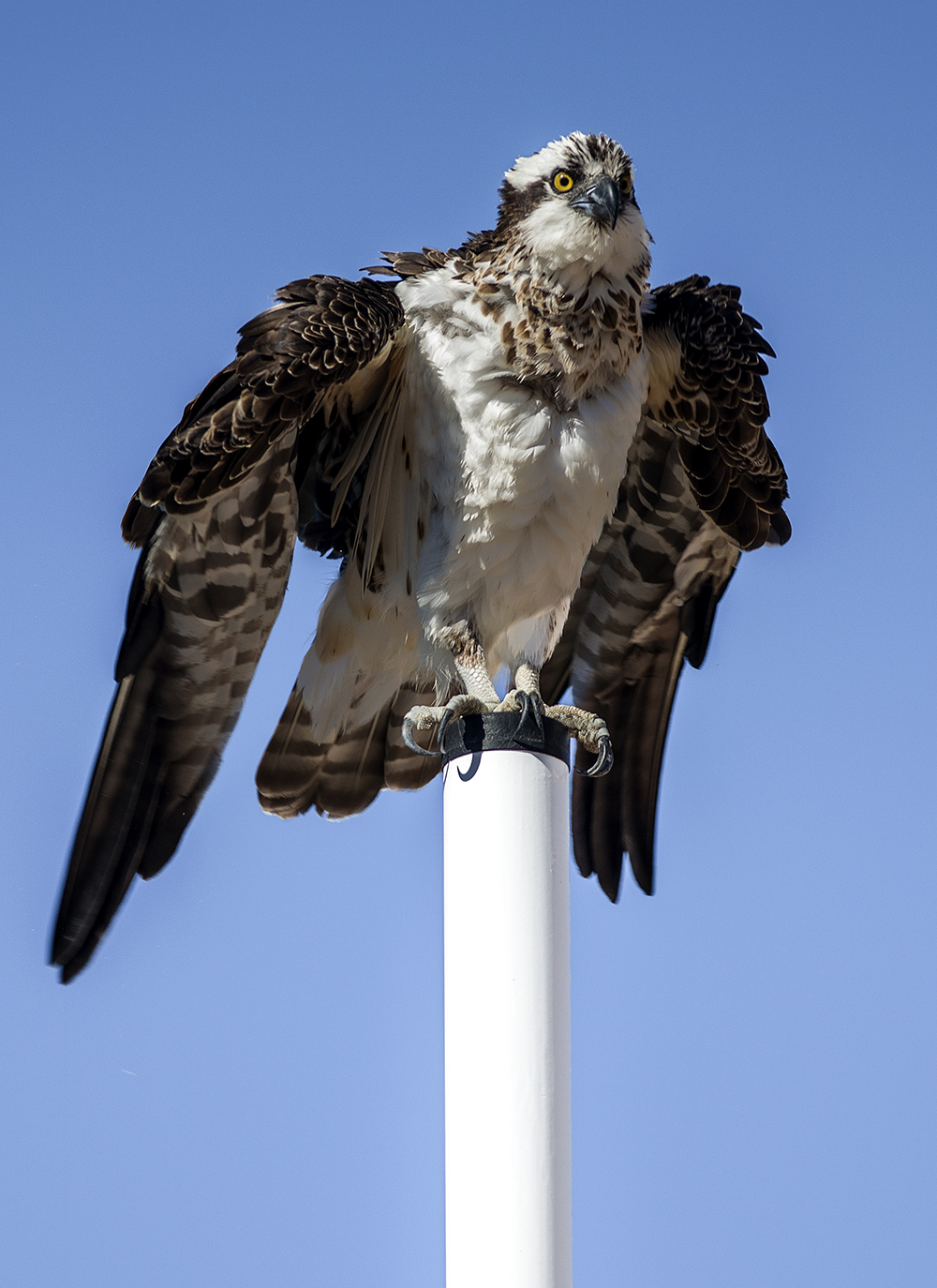
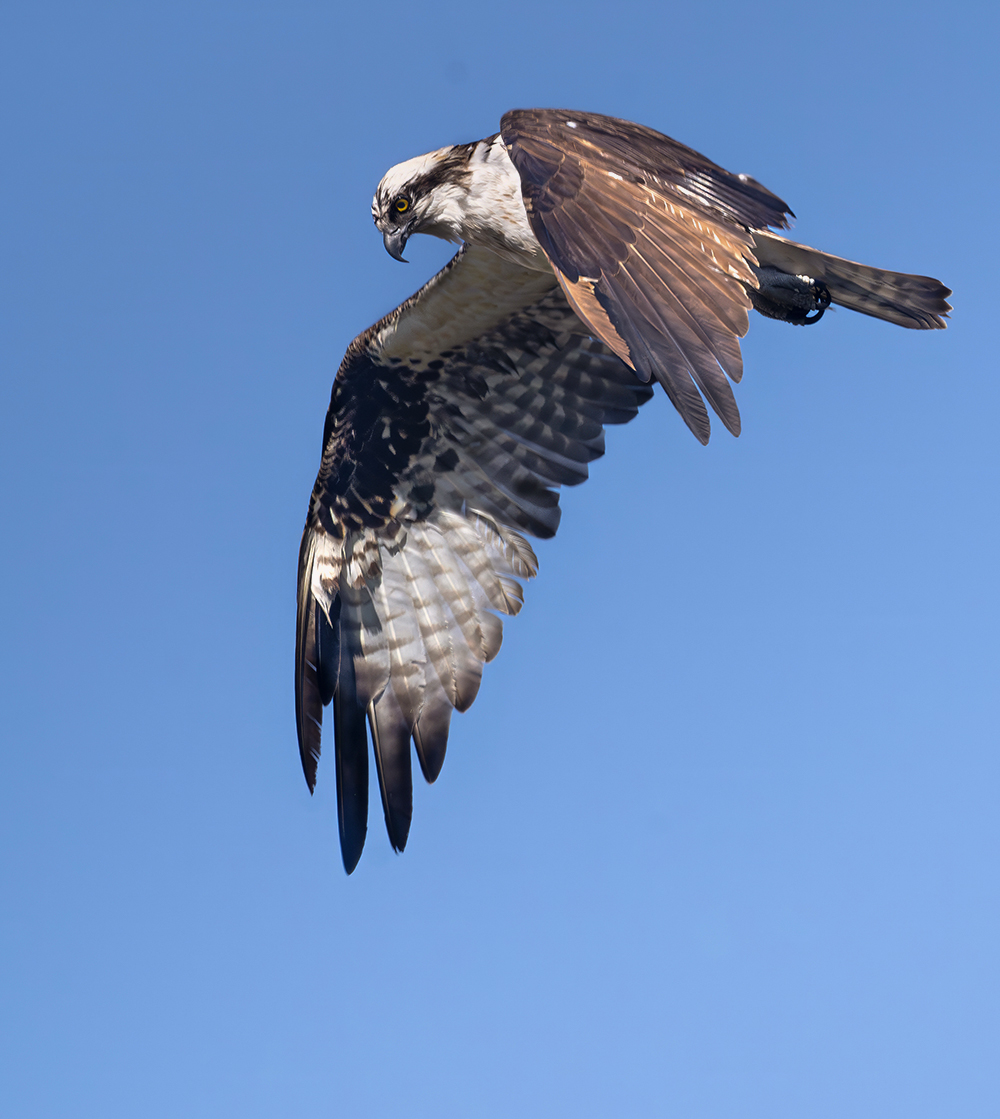
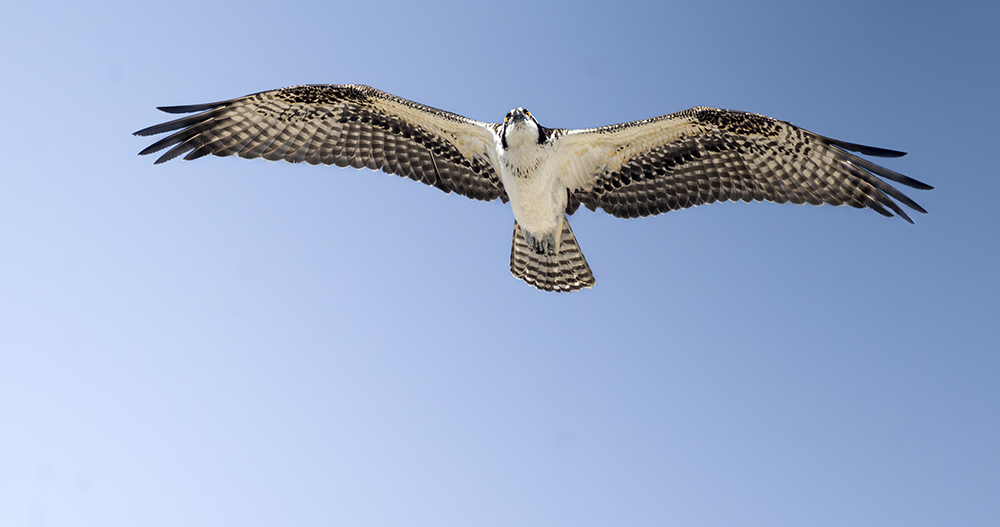
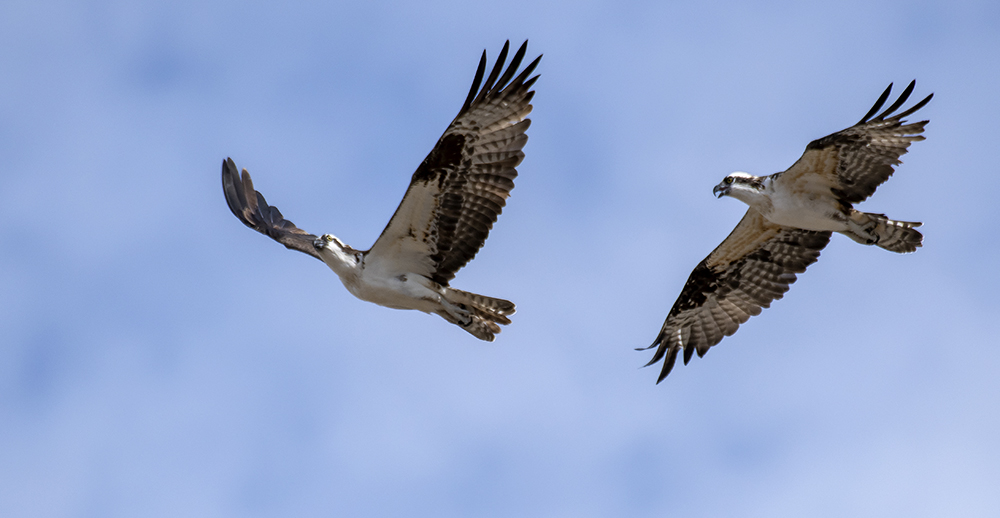
The Osprey is one of the most distinctive raptors in the world and is encountered in Arizona primarily as a migrant and winter visitor. Its striking plumage pattern, with bold dark eye stripes, gleaming white underparts, and long, narrow wings that kink at the “wrist” to form a characteristic M-shape in flight, makes it nearly unmistakable. Because of its highly specialized diet—almost exclusively live fish—the Osprey is closely tied to aquatic habitats and is most often seen near Arizona’s reservoirs, lakes, and large rivers.
In Arizona, the Osprey does not breed regularly, though scattered nesting attempts have been recorded. These are usually associated with man-made reservoirs where suitable nesting platforms, such as utility poles, dead trees, or artificial structures, are available. Most individuals observed in the state are migrants passing through during spring (March–May) and fall (August–October). During these seasons, they can be found at major stopover sites such as Lake Pleasant, Roosevelt Lake, Lake Havasu, Lake Patagonia, and along the Colorado River. Smaller lakes and ponds, including urban water features, can also host transient birds. A smaller number overwinter in the state, particularly in areas with consistent fish populations such as along the lower Colorado River and larger reservoirs.
The hunting style of Pandion haliaetus is dramatic and memorable. Birds patrol above the water, sometimes hovering, before plunging feet-first to snatch fish with their long, sharp talons. Adaptations such as reversible outer toes and barbed pads on the soles of their feet make them uniquely suited to gripping slippery prey. After a catch, Ospreys often align the fish head-forward in their talons to reduce wind resistance during flight.
Although Ospreys are far more abundant in northern and coastal regions of North America, Arizona’s lakes and reservoirs provide essential resources for migrating individuals. Their presence underscores the ecological value of the state’s riparian corridors and artificial water bodies as critical stopover habitats in an otherwise arid landscape. Conservation efforts, including nest platform installations and water quality protection, have benefited the species across much of its range, and occasional successful breeding in Arizona hints at the potential for future expansion.