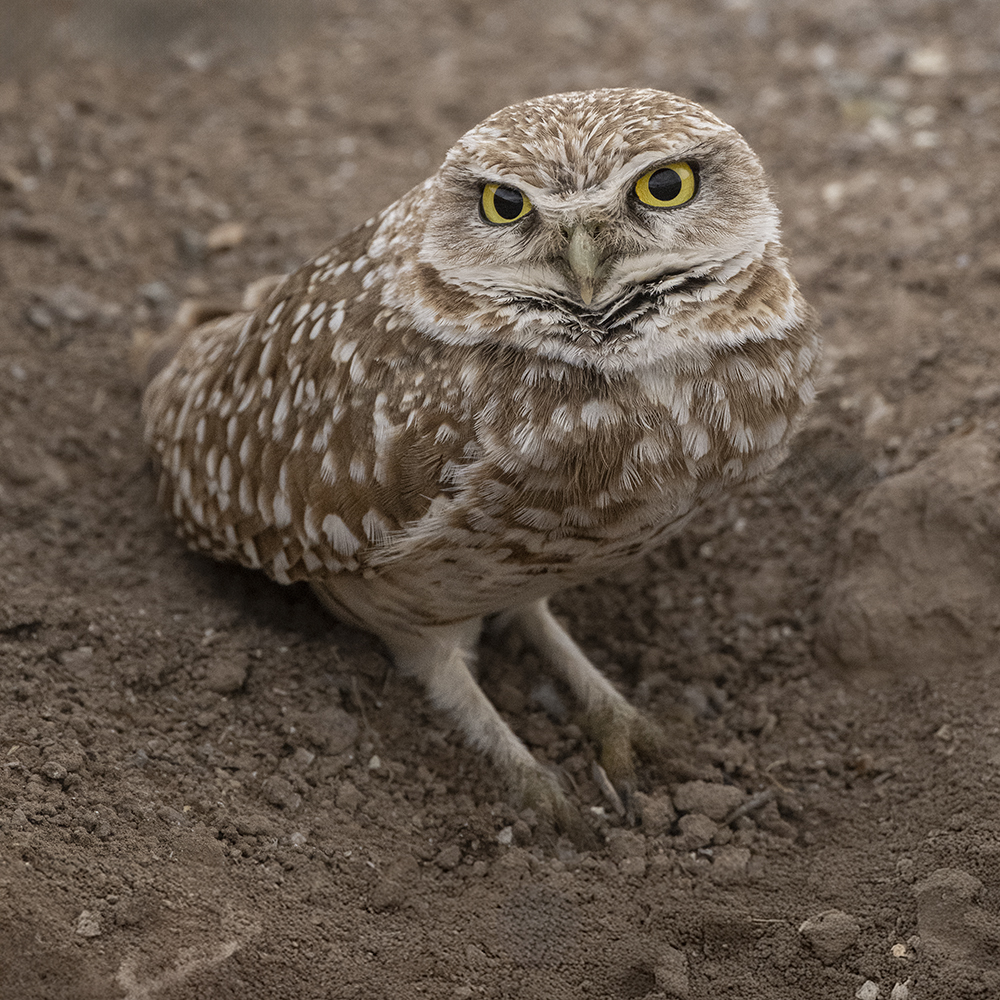
The Burrowing Owl is a small, long-legged owl found year-round in parts of Arizona, favoring open grasslands, deserts, agricultural fields, and prairies with low vegetation. Unlike most owls, it nests and roosts in underground burrows, often those abandoned by mammals such as prairie dogs or ground squirrels, though it may also use artificial burrows. In Arizona, populations occur both in natural desert habitats and in human-modified landscapes, including farmlands, golf courses, and even urban edges. Standing about 7.5–10 inches tall, with bright yellow eyes, white eyebrows, and mottled brown and white plumage, the species is diurnal as well as crepuscular, often seen perched near burrow entrances or hunting insects, small mammals, reptiles, and other prey in daylight. Breeding typically begins in spring, with clutches of 6–12 eggs laid in burrows lined with dried vegetation, feathers, and sometimes animal dung, which may help mask scent from predators. While the species is globally listed as Least Concern, Burrowing Owls in Arizona face threats from habitat loss, agricultural intensification, and the decline of burrowing mammals, leading to local population declines and increased conservation attention, including artificial burrow programs and habitat protection efforts.