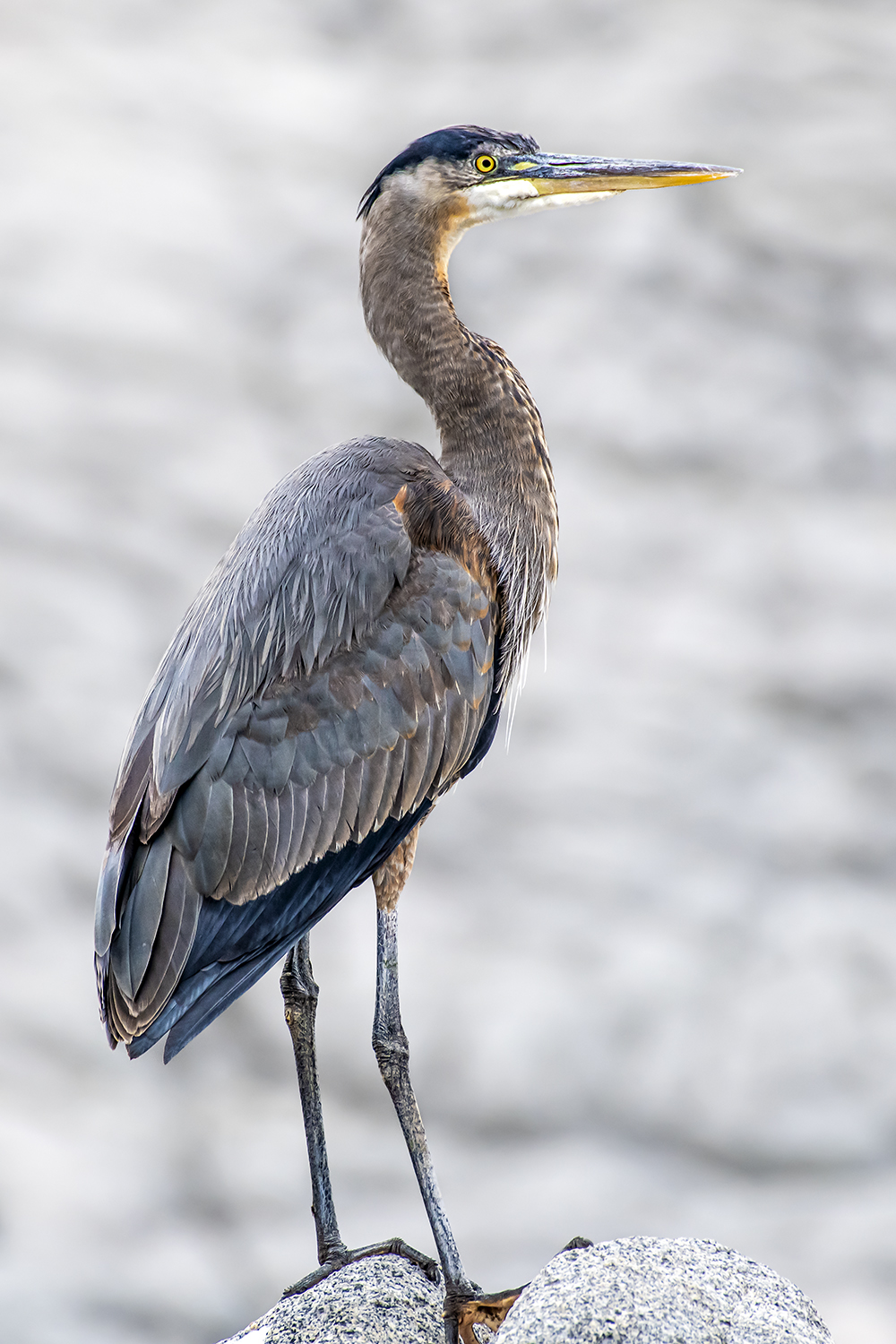
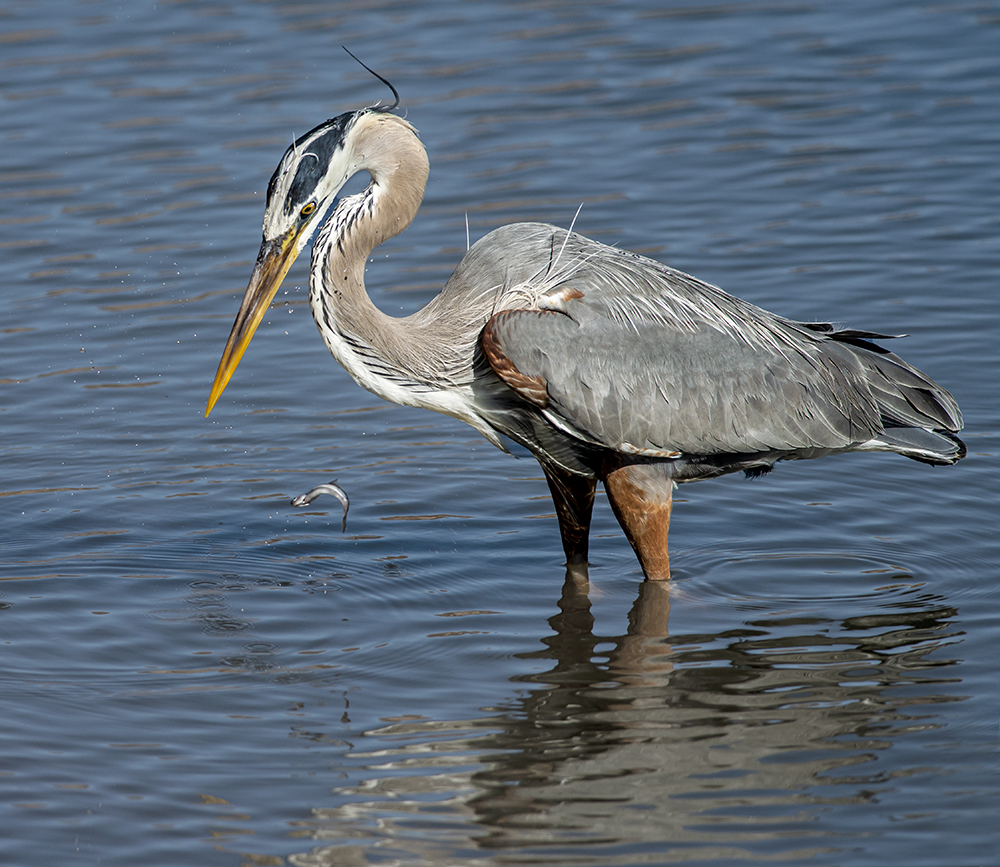
Great Blue Herons are the largest and most widespread herons in North America, and they are a familiar year-round presence in Arizona. Standing up to 4.5 feet tall with a wingspan of around 6 feet, these stately wading birds are most often seen alone, stalking shallow waters in lakes, rivers, wetlands, and even desert stock ponds in search of fish, amphibians, and small mammals.
In Arizona, Great Blue Herons breed in scattered colonies—often in tall cottonwoods or cliffs near water—and may form nesting rookeries with other species such as cormorants and egrets. They are especially common in riparian corridors and at locations like the Lower Colorado River, San Pedro River, and major reservoirs. Their slow, deliberate movements, dagger-like bill, and majestic flight with slow wingbeats and a tucked-in neck make them easy to identify.
Despite their size and visibility, Great Blue Herons are surprisingly adaptable, able to thrive even in urban parks and golf course ponds.