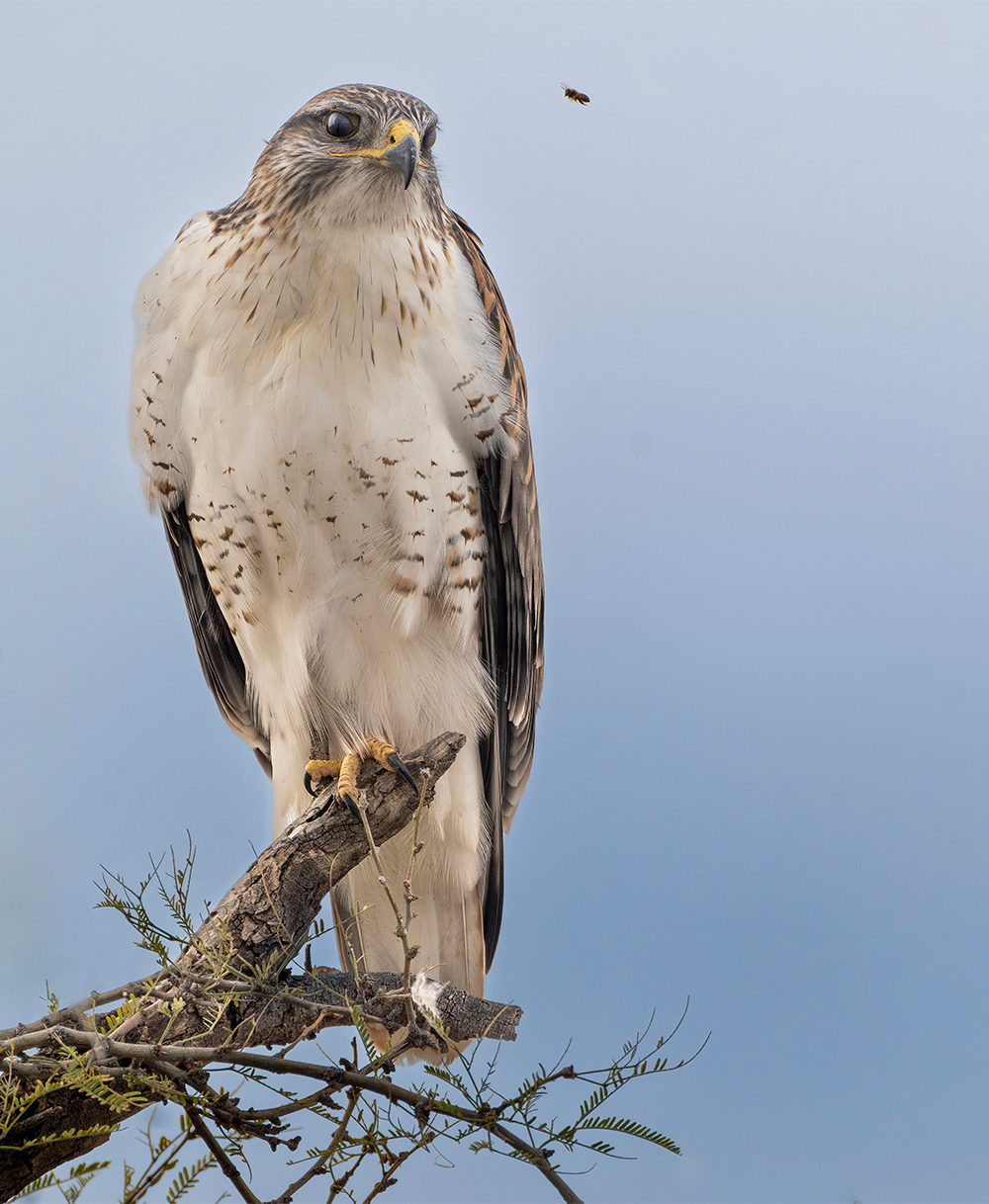
The Ferruginous Hawk, the largest hawk in North America, is an impressive seasonal presence in Arizona. Measuring 22–27 inches in length with a wingspan of 52–60 inches, it is most often seen in its light morph form, with pure white underparts, rust-colored shoulders and legs, and a pale head that forms a distinctive “V” shape in flight. Dark morph individuals are less common, displaying rich rufous-brown plumage.
In Arizona, Buteo regalis is primarily a winter visitor, arriving in October and remaining through early March, with a few pairs nesting locally in open grasslands and desert scrub. It favors expansive, open habitats such as plains, valleys, ranchlands, and agricultural fields, often using power poles, towers, lone trees, or cliffs as hunting perches. Occasionally, it will nest or rest directly on the ground, especially where elevated sites are scarce.
This species is a versatile hunter, adept both in the air and on the ground. It may soar with slightly raised wings, hover, or perch before striking, and is known for ambushing prey at burrow entrances, using its large feet to flush out animals. Its diet consists mainly of medium-sized mammals such as prairie dogs, ground squirrels, rabbits, and gophers, with birds and reptiles taken occasionally. Nests are large and sturdy, built from sticks, debris, and sometimes unusual items like bison bones or wool.
In Arizona, the Ferruginous Hawk is considered a sparse local breeder and is classified by the Arizona Game and Fish Department as a Tier 2 Species of Greatest Conservation Need, due to concerns over declining populations and habitat loss.