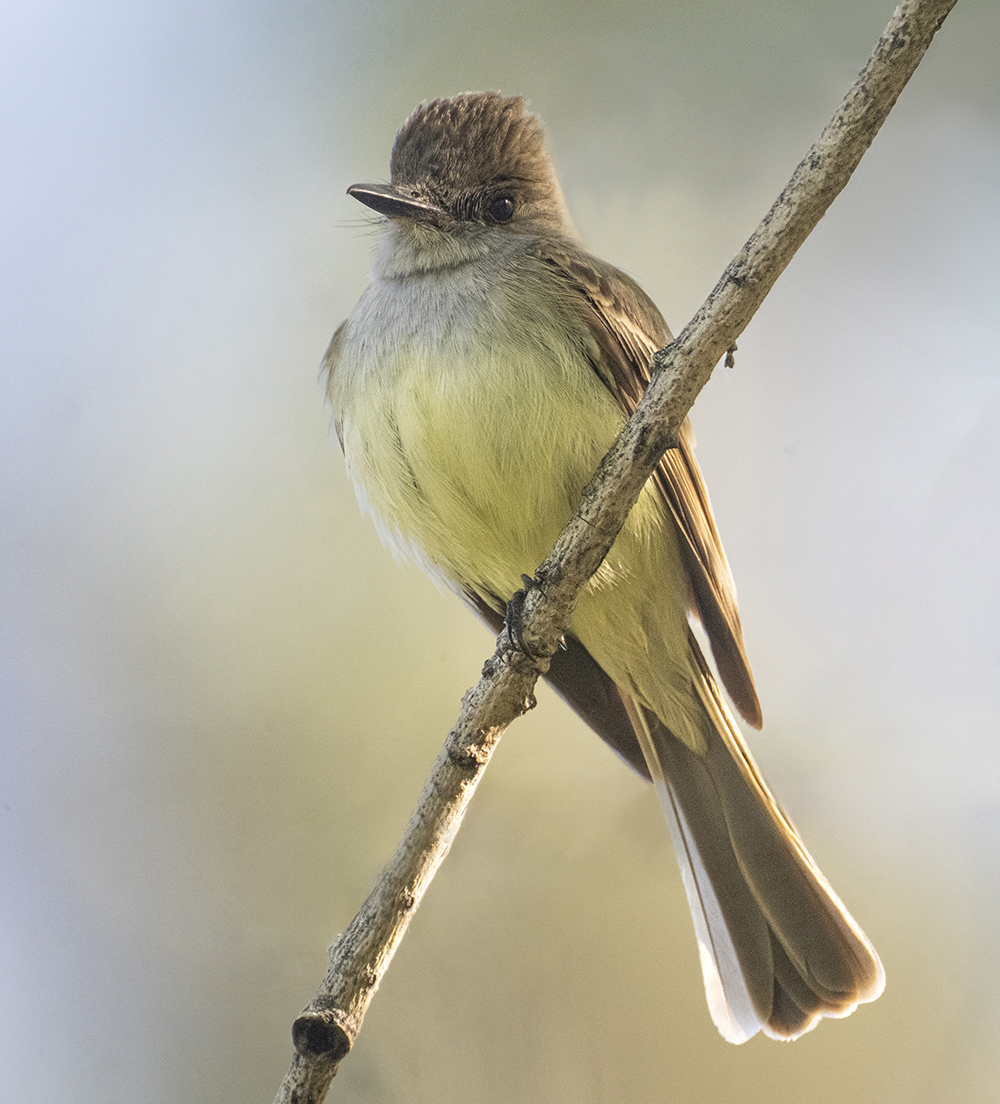
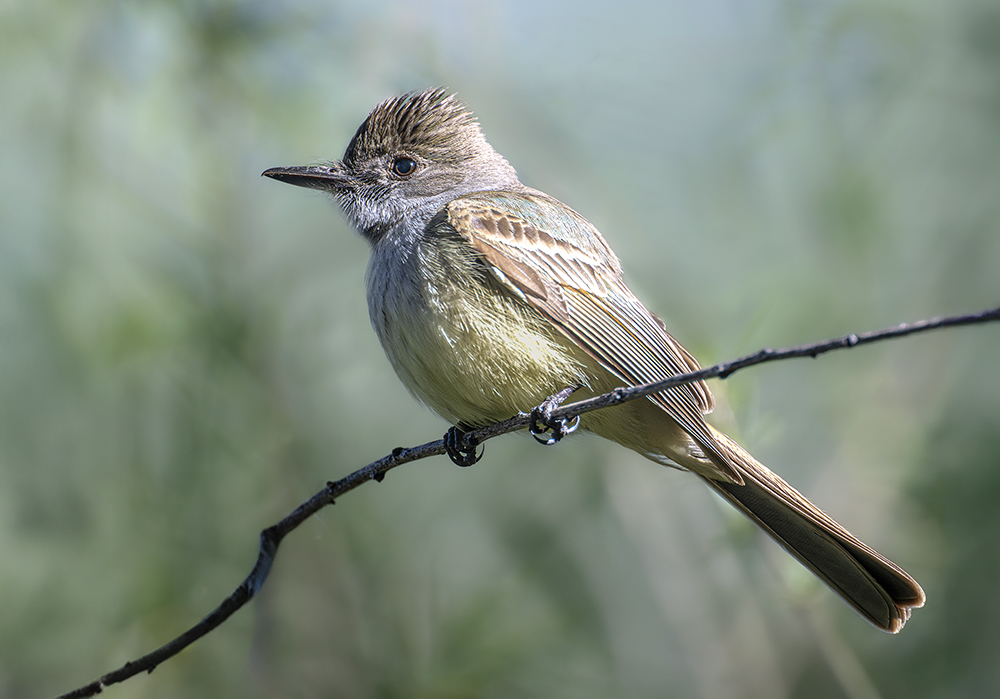
The Dusky-capped Flycatcher is a small, slender member of the tyrant flycatcher family that breeds in southeastern Arizona, where the species reaches the northern limit of its range. It is most often encountered in the “Sky Island” mountain ranges of Cochise, Santa Cruz, and Pima counties, especially in canyons with oak, pine-oak, and riparian woodlands. This species arrives in Arizona in late April and remains through the summer breeding season, typically departing by September.
The Myiarchus tuberculifer is recognized by its olive-brown back, rufous in the tail and wings, and pale yellow wash on the belly, contrasting with a gray throat and breast. Its upright posture, bushy crest, and habit of sallying out from shaded perches to capture insects make it typical of the Myiarchus genus, but its soft, plaintive “peeur” call helps distinguish it from similar species such as the Ash-throated Flycatcher (Myiarchus cinerascens) and Brown-crested Flycatcher (Myiarchus tyrannulus).
Nesting in Arizona usually takes place in natural cavities or old woodpecker holes, sometimes augmented with snake skin, plant fibers, and other materials. Although the species is widely distributed in Mexico and Central America, the breeding population in Arizona is small and localized, which gives it special significance to birders in the region. Sightings are considered a highlight of summer birding in canyons such as Madera, Cave Creek, and Ramsey.