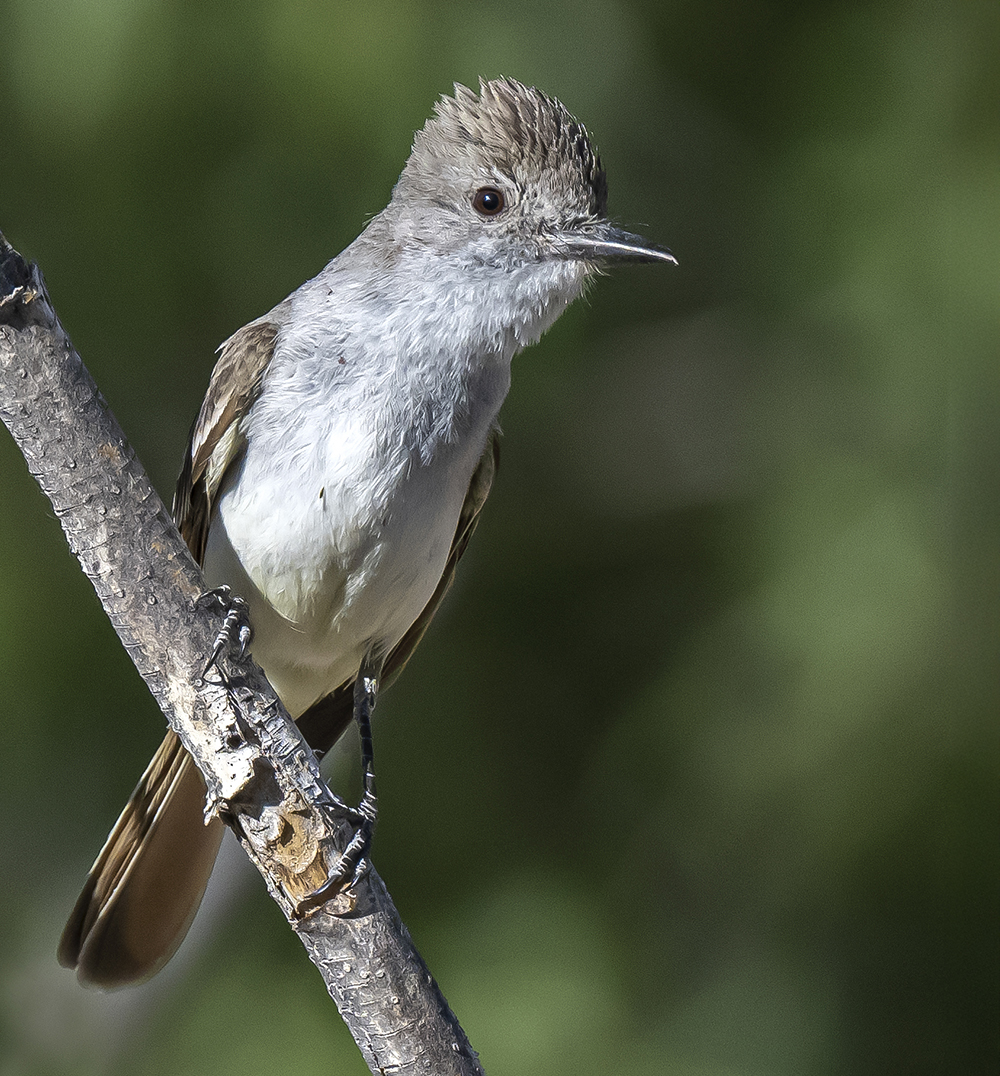
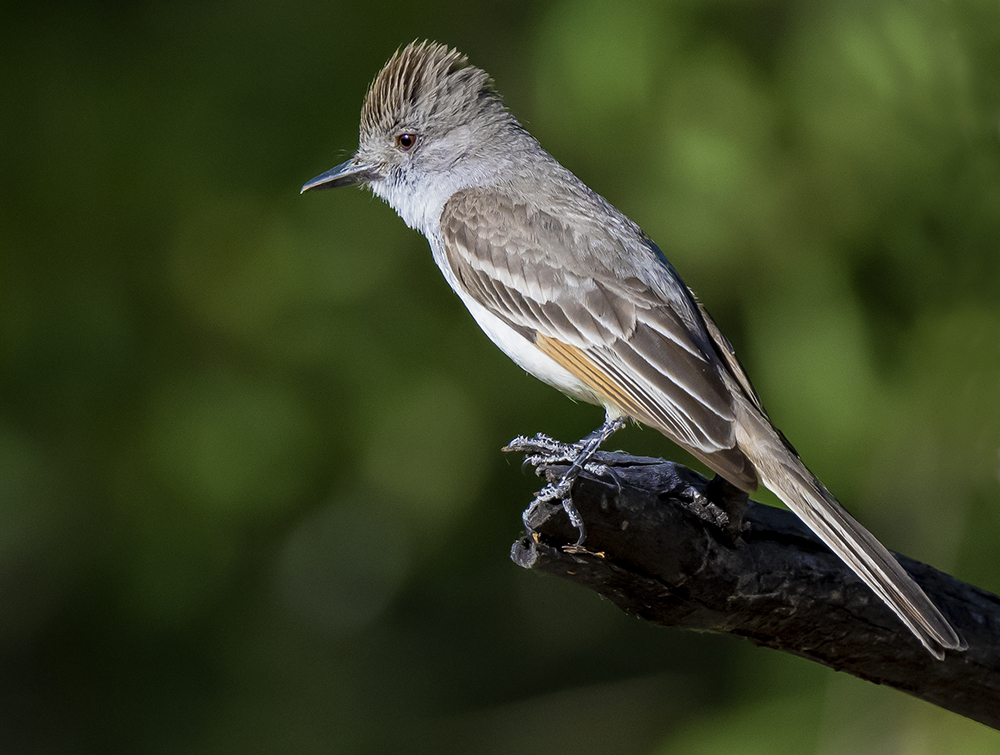
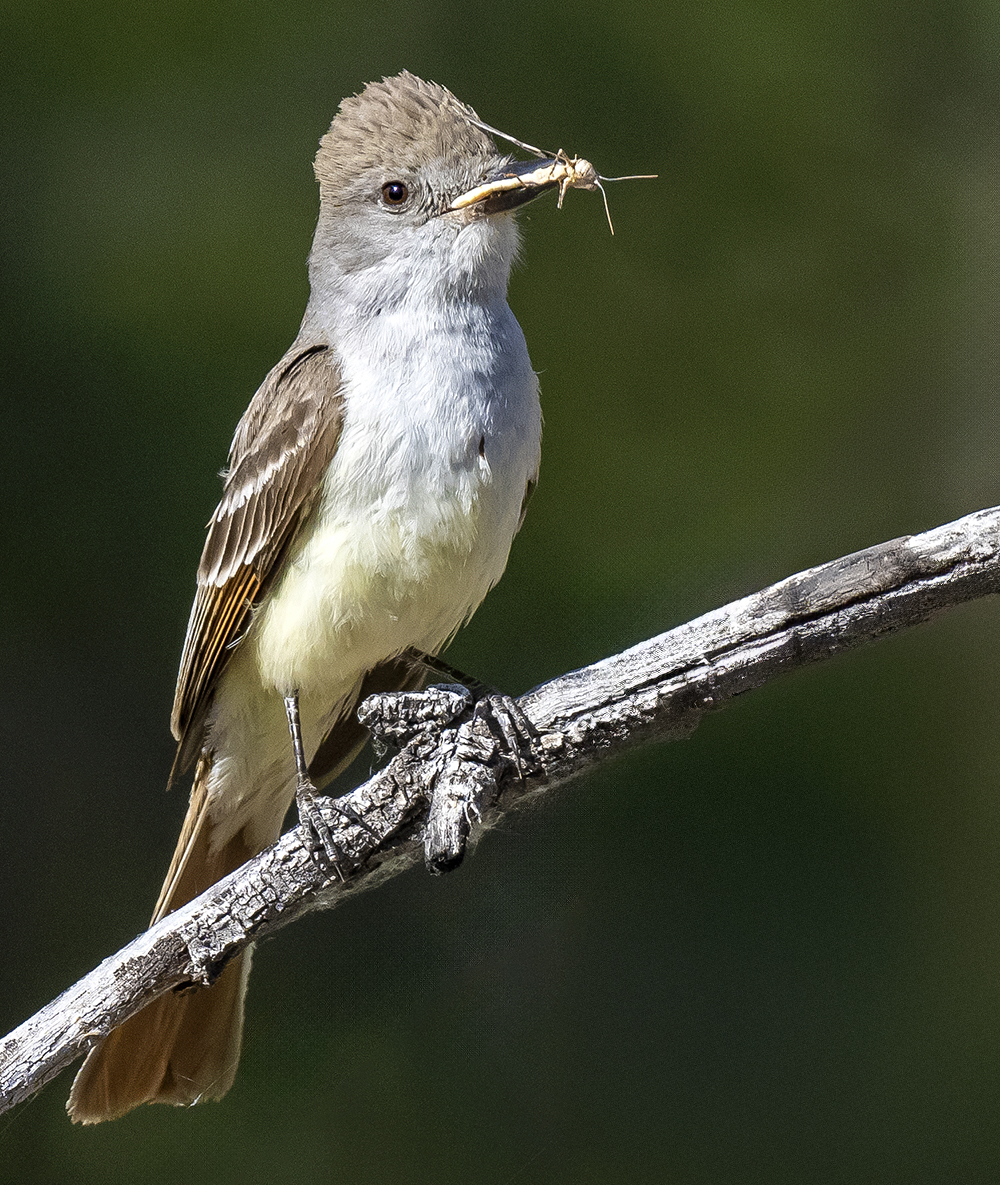
The Ash-throated Flycatcher is a widespread summer breeder in Arizona and one of the most commonly encountered members of the genus Myiarchus in the state. This medium-sized flycatcher, typically 7–8 inches in length, is distinguished by its pale gray throat and breast, warm rufous tones in the tail and wings, and a relatively subdued appearance compared to some of its tropical relatives. Despite its plain plumage, it is readily recognized by its loud, burry calls and preference for semi-arid habitats.
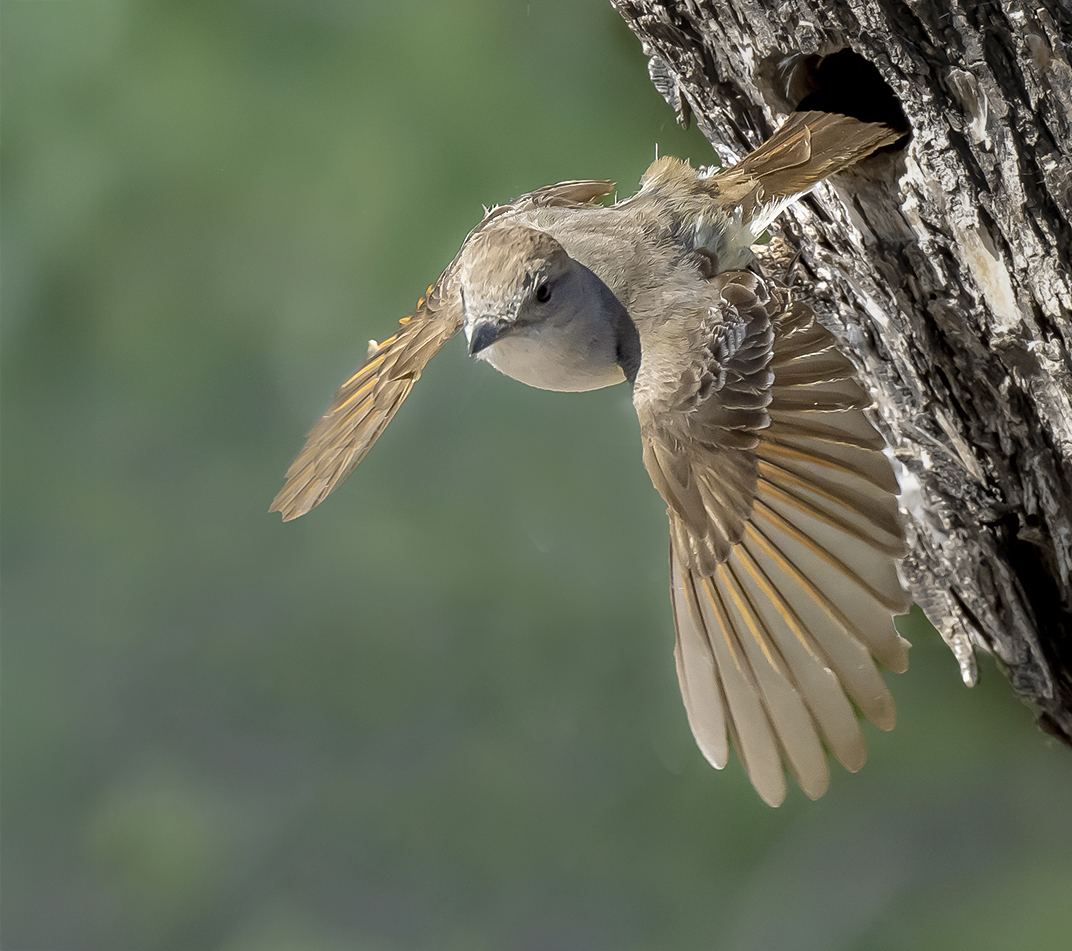
In Arizona, Myiarchus cinerascens is a characteristic bird of desert scrub, pinyon-juniper woodlands, oak savannas, and riparian corridors. It is especially common in the Sonoran Desert and the uplands of southeastern Arizona’s “Sky Islands,” where it breeds from spring through late summer. Nesting often occurs in cavities such as old woodpecker holes, natural crevices, or nest boxes, where the birds line their nests with a mixture of grasses, plant fibers, and, famously, shed snakeskins—thought to deter predators.
The species is insectivorous, sallying out from perches to capture flying insects, but it also consumes berries and other small fruits when available. After the breeding season, most individuals migrate southward to wintering grounds in Mexico and Central America, though migration through Arizona can be protracted, with some individuals lingering well into October.
Within the state, the Ash-throated Flycatcher is considered widespread and generally common, unlike some other Myiarchus species such as the Dusky-capped Flycatcher (Myiarchus tuberculifer) or Brown-crested Flycatcher (Myiarchus tyrannulus), which are more localized.