
The Northern Cardinal is a striking, year-round resident in much of southern and central Arizona, where riparian woodlands and mesquite thickets provide the dense cover it favors. It is especially common in southeastern counties such as Pima, Santa Cruz, and Cochise, but it also occurs northward along the Gila and Salt River corridors, in the Phoenix basin, and locally as far as Yavapai County. The species avoids the open Sonoran Desert and high mountain elevations, concentrating instead in lush desert washes, suburban neighborhoods with mature plantings, and agricultural areas with thick hedgerows or tamarisk stands.
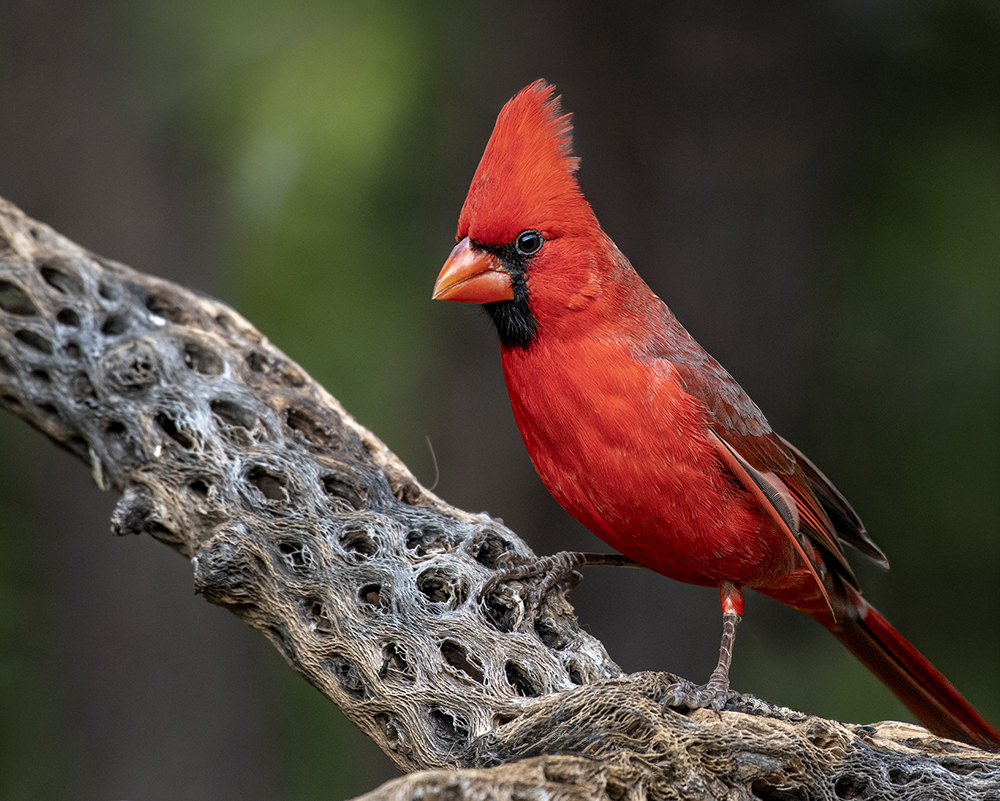
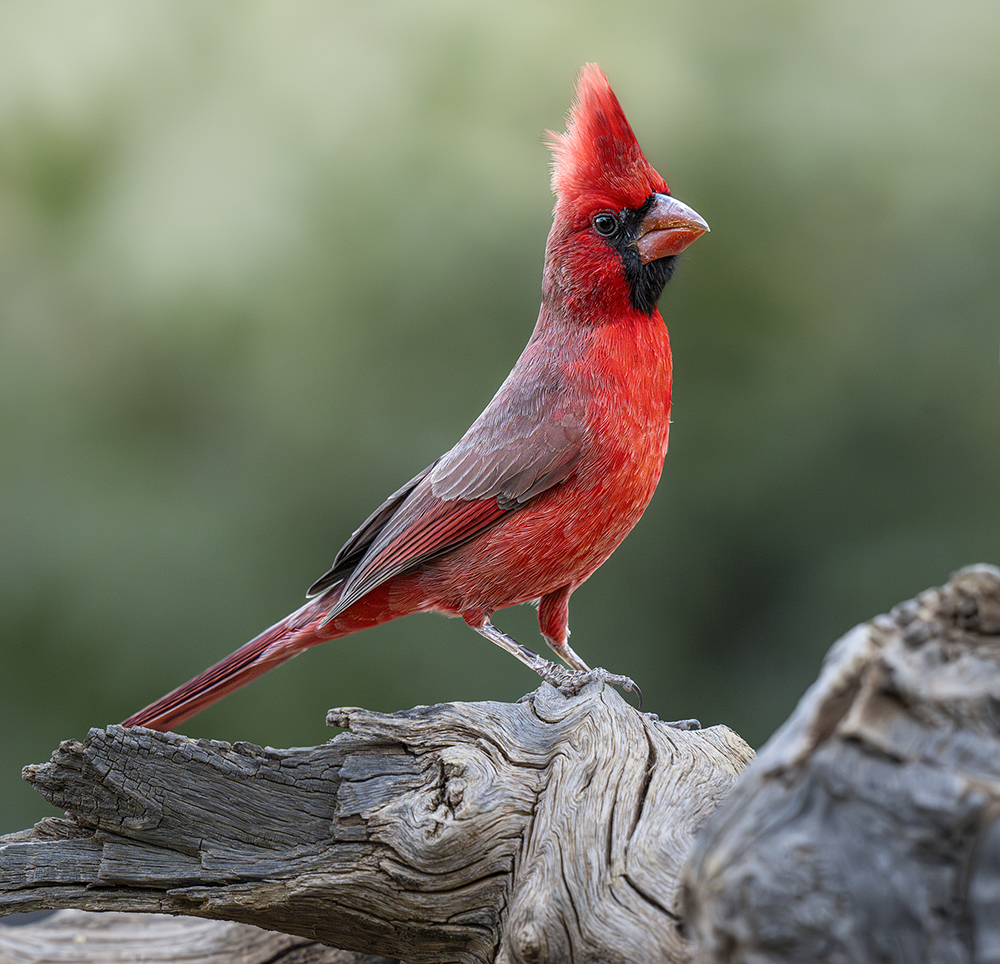
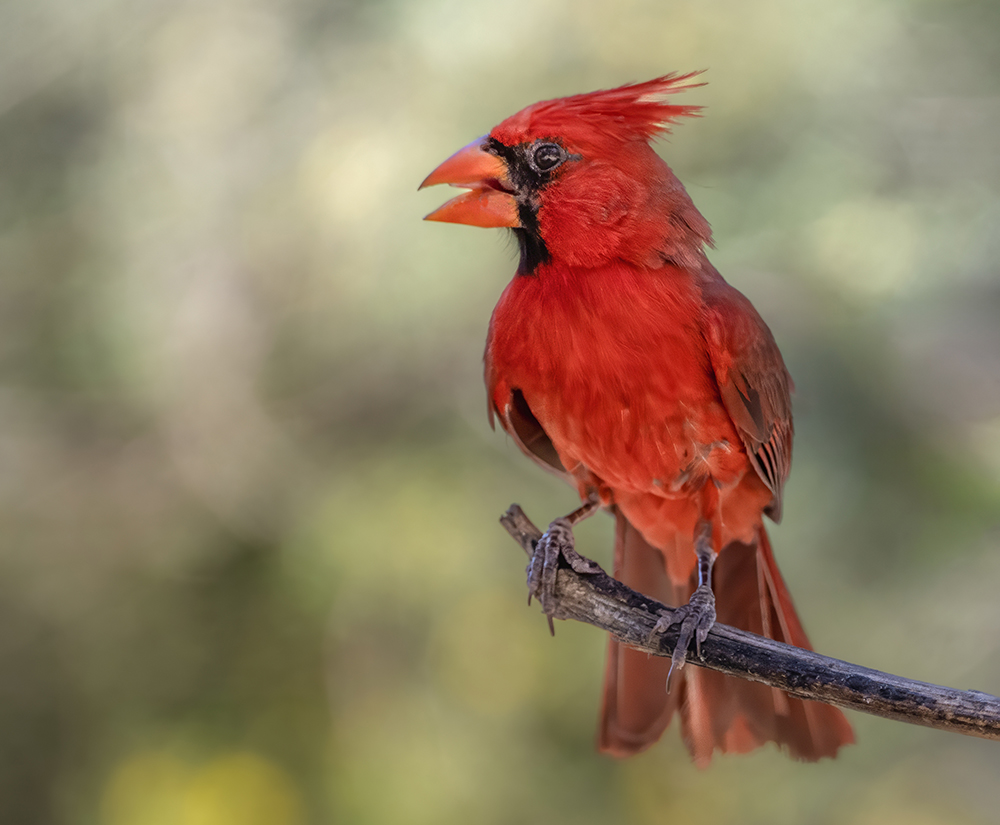
Adult males are brilliant crimson with a black mask around the face and throat, while females are buff-brown with red tones in the wings, tail, and crest. Both sexes share the prominent crest and stout reddish-orange bill. Cardinals are well known for their rich, whistled songs—clear, ringing phrases such as “cheer-cheer-cheer” or “birdy-birdy-birdy.” Unlike most songbirds, both males and females sing, often duetting to strengthen pair bonds and defend territories.
Their diet consists mainly of seeds and fruits, complemented by insects during the warmer months, and they readily visit backyard feeders. Foraging takes place on the ground or in low shrubs, where they hop methodically in search of food. Nests are neat, cup-shaped structures built low in dense shrubs or vines, typically by the female, and lined with grasses and fine plant fibers. In Arizona’s mild climate, cardinals may raise two or even three broods between March and August.

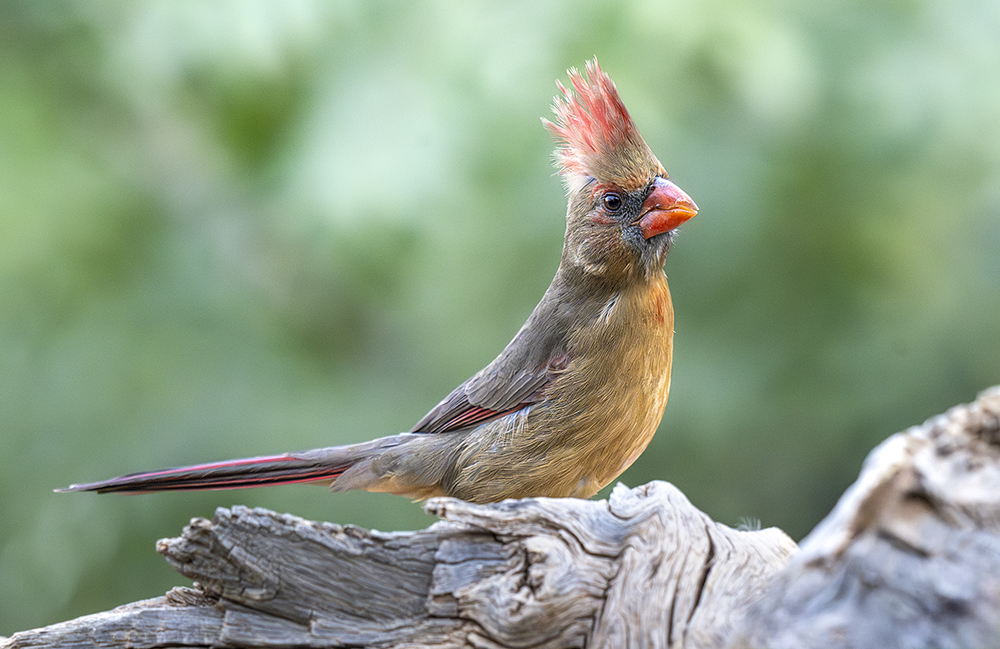
Female
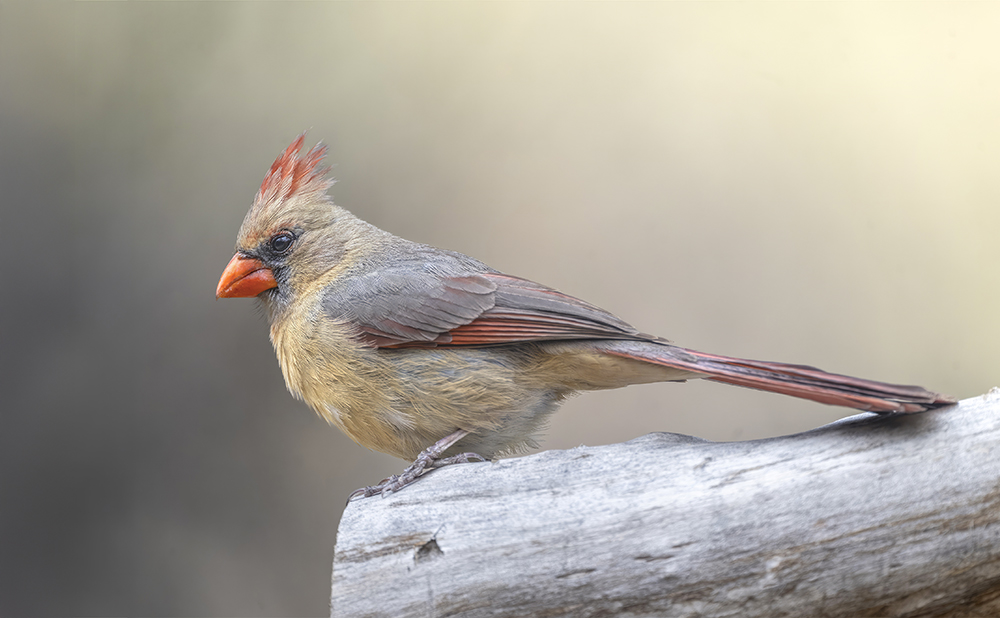
Female
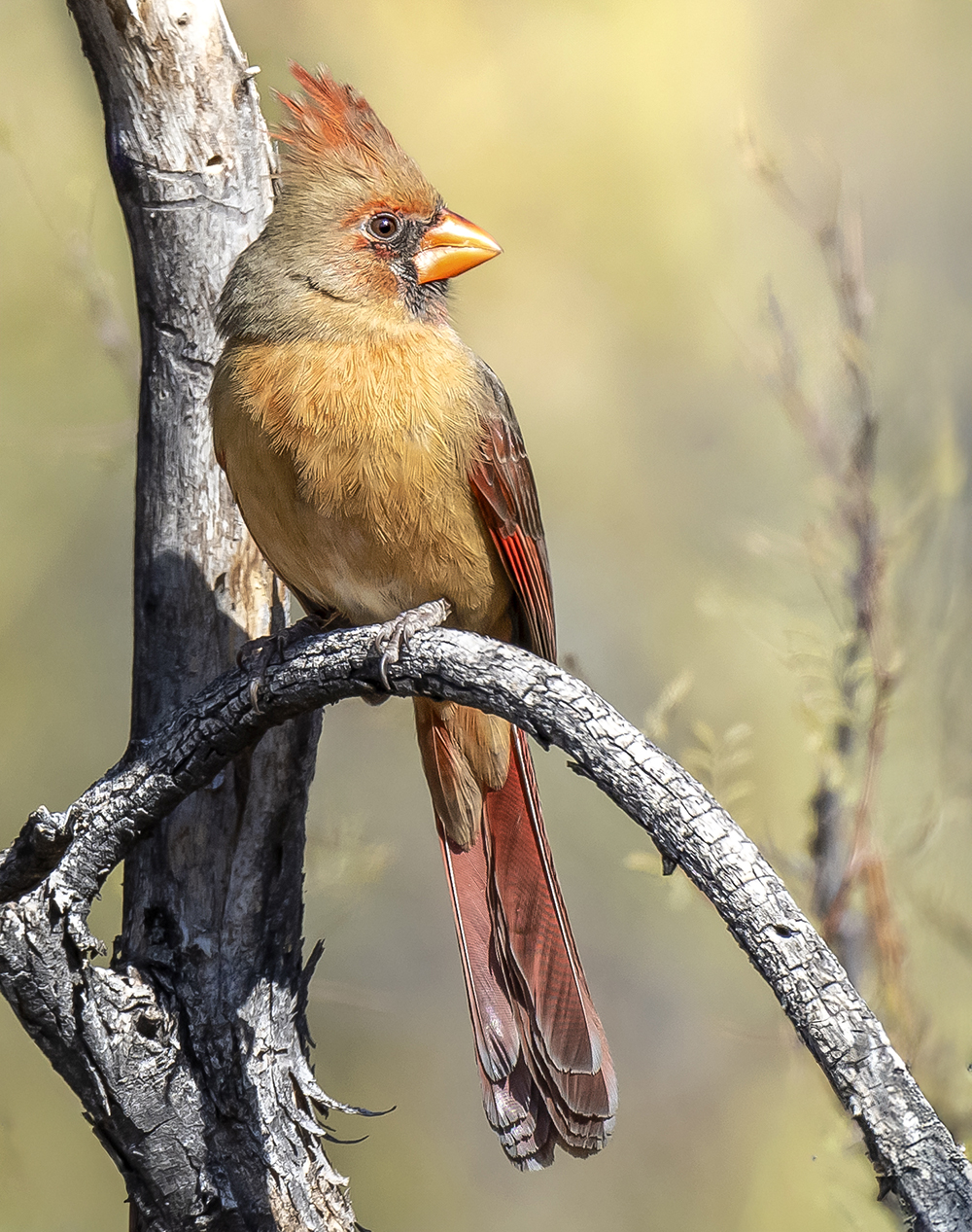
Female