
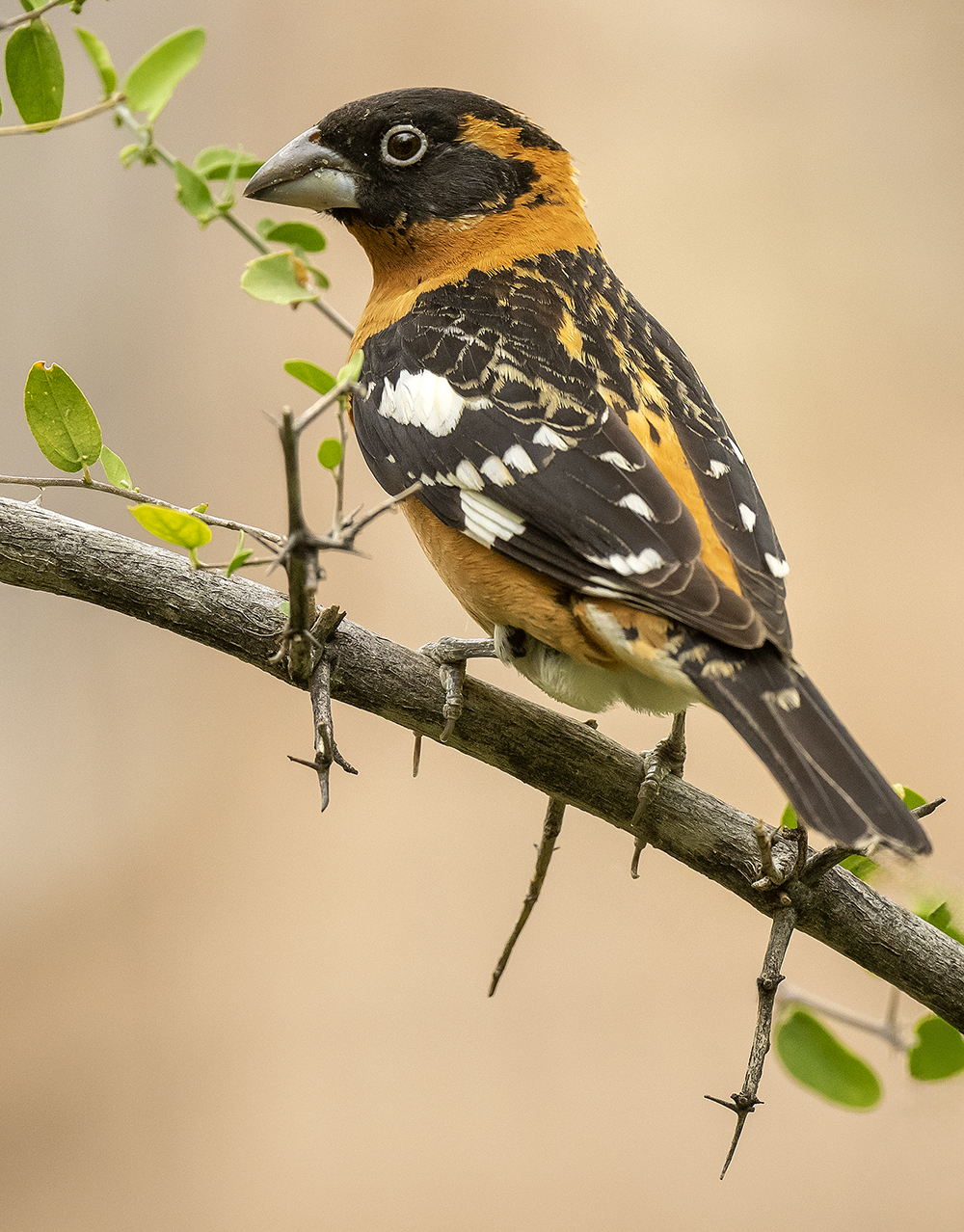
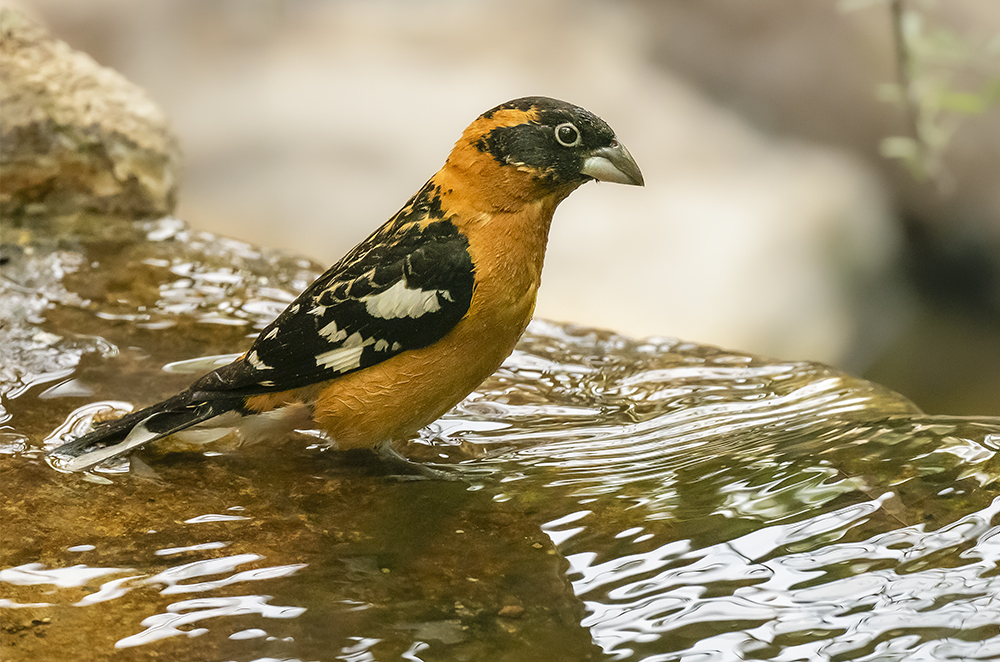
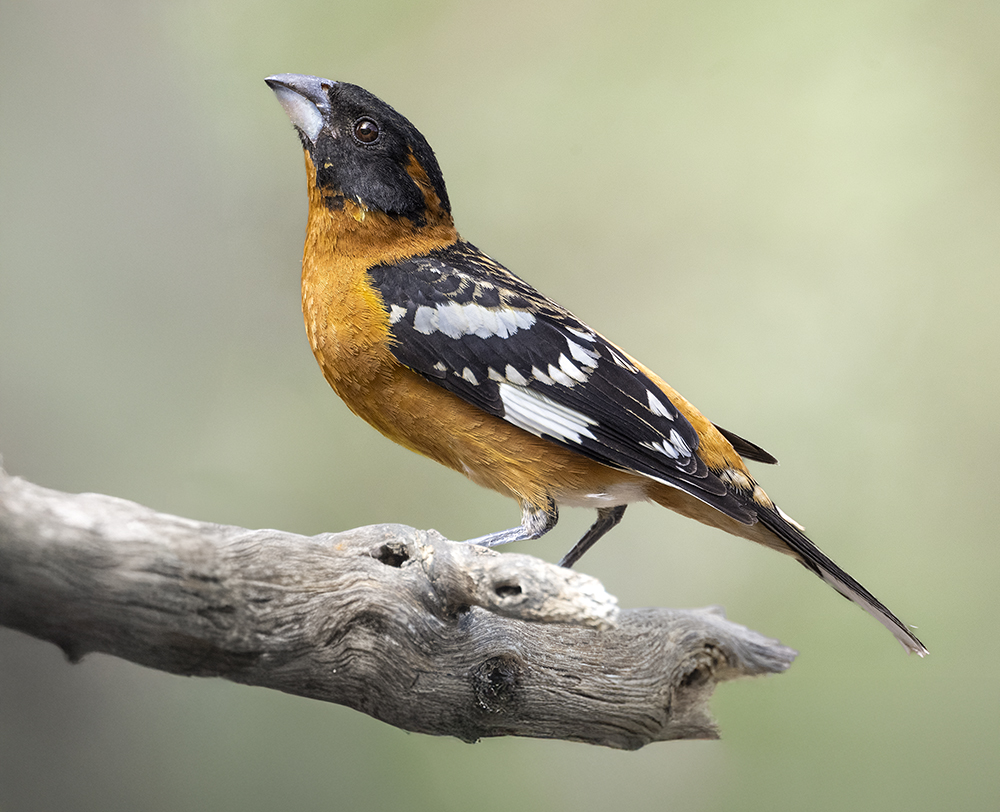
The Black-headed Grosbeak is a familiar summer visitor throughout much of Arizona, where it breeds in canyons, riparian woodlands, and oak-covered slopes from the lowlands to mid-elevations. This striking songbird is easily recognized by the male’s vivid plumage—rich orange-cinnamon underparts, a black head and upperparts, and contrasting black-and-white wings. The female is more subtly marked, with buffy tones, streaked underparts, and a brownish crown with a lighter supercilium, making her resemble a large sparrow or female oriole.
These grosbeaks typically arrive in Arizona from their wintering grounds in Mexico by late April or early May. They favor nesting sites near streams or in deciduous groves, often choosing cottonwood, sycamore, or oak trees. The nest, built by the female, is a loosely constructed cup of twigs, grasses, and plant fibers, where she lays three to four pale blue-green eggs.
The Black-headed Grosbeak’s song is one of the most melodious in the Southwest—rich, warbling, and reminiscent of an American Robin (Turdus migratorius), but more fluid, complex, and exuberant. Males sing persistently throughout the breeding season to defend territories and attract mates.
Their diet is omnivorous and highly adaptable, consisting of insects, seeds, berries, and fruit. They are particularly notable for their ability to consume monarch butterflies (Danaus plexippus), whose toxins deter most predators; the grosbeak’s unique tolerance to these compounds allows it to exploit this otherwise forbidden food source.
By late summer, adults and their fledglings begin moving southward, migrating back to Mexico and Central America. During migration, Black-headed Grosbeaks are frequent visitors to backyard feeders offering sunflower seeds or fruit.
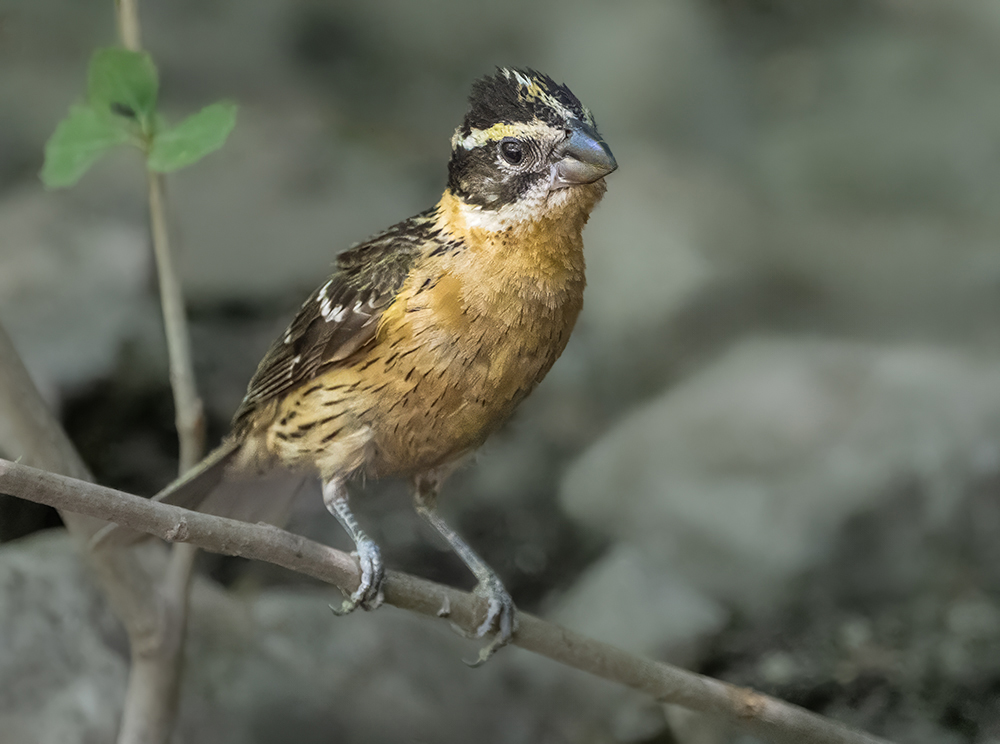
Female