
The Blue Grosbeak is a common summer breeder across much of lowland Arizona, particularly favoring habitats with a mix of shrubs and open areas. It thrives along desert washes, riparian corridors lined with mesquite or cottonwood, and the borders of irrigated fields and pastures. The species’ presence is most noticeable from late April through September, when males sing persistently from prominent perches such as fence lines or treetops, their rich, warbling song carrying over the arid landscape.
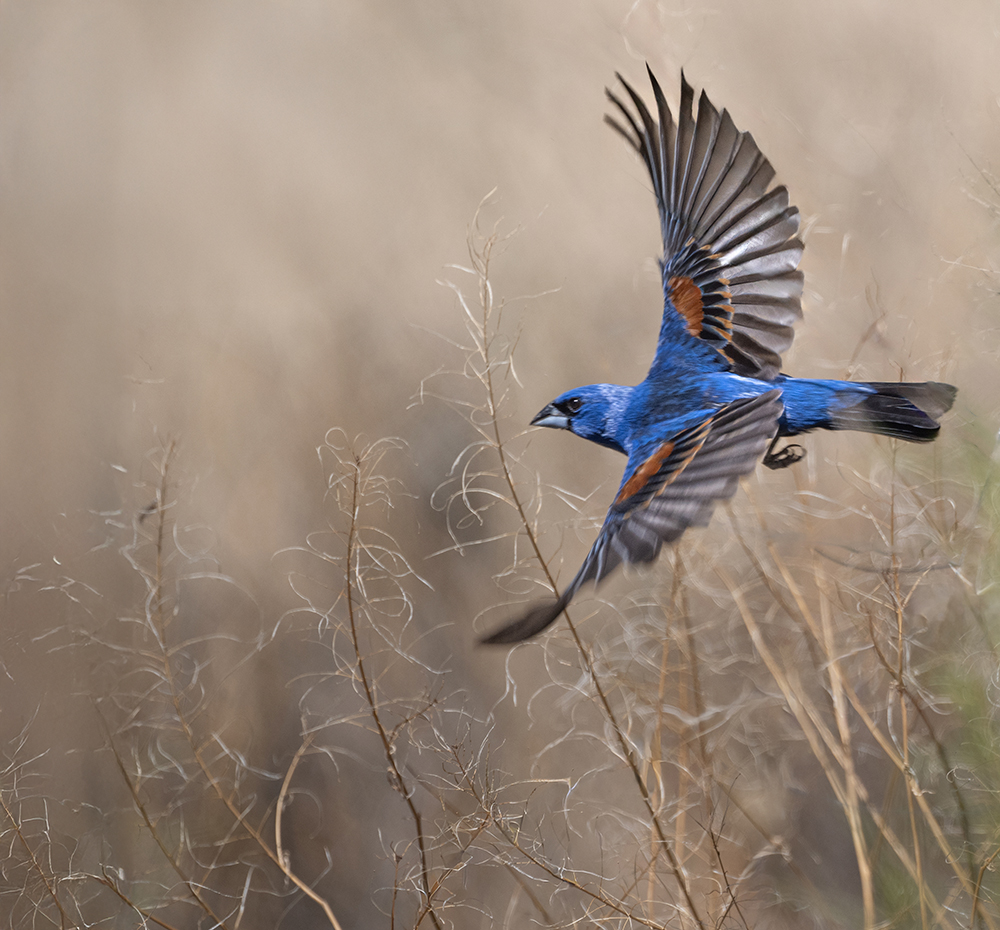
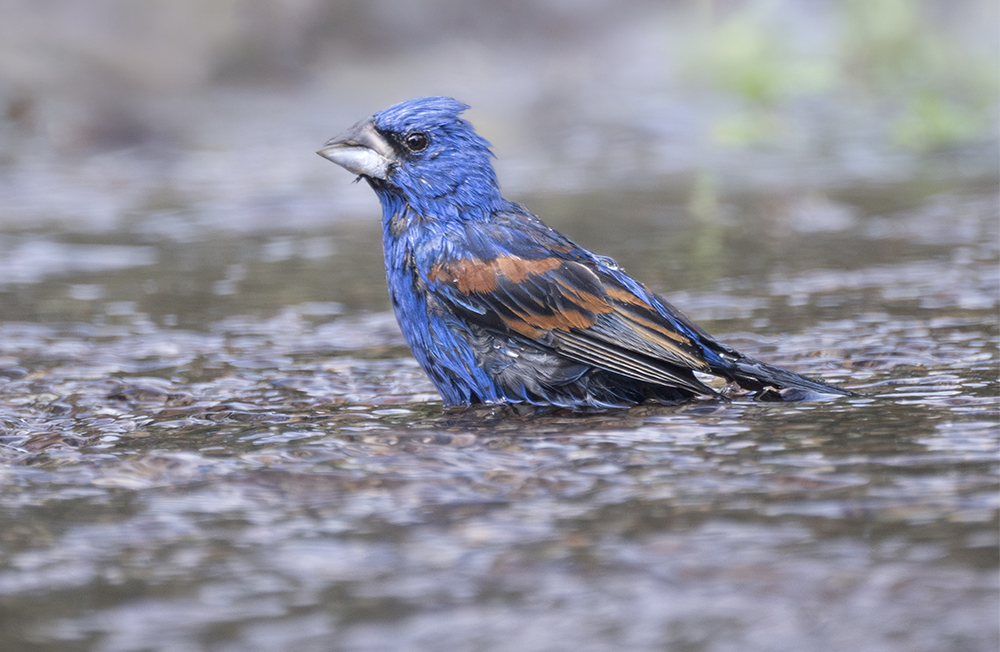
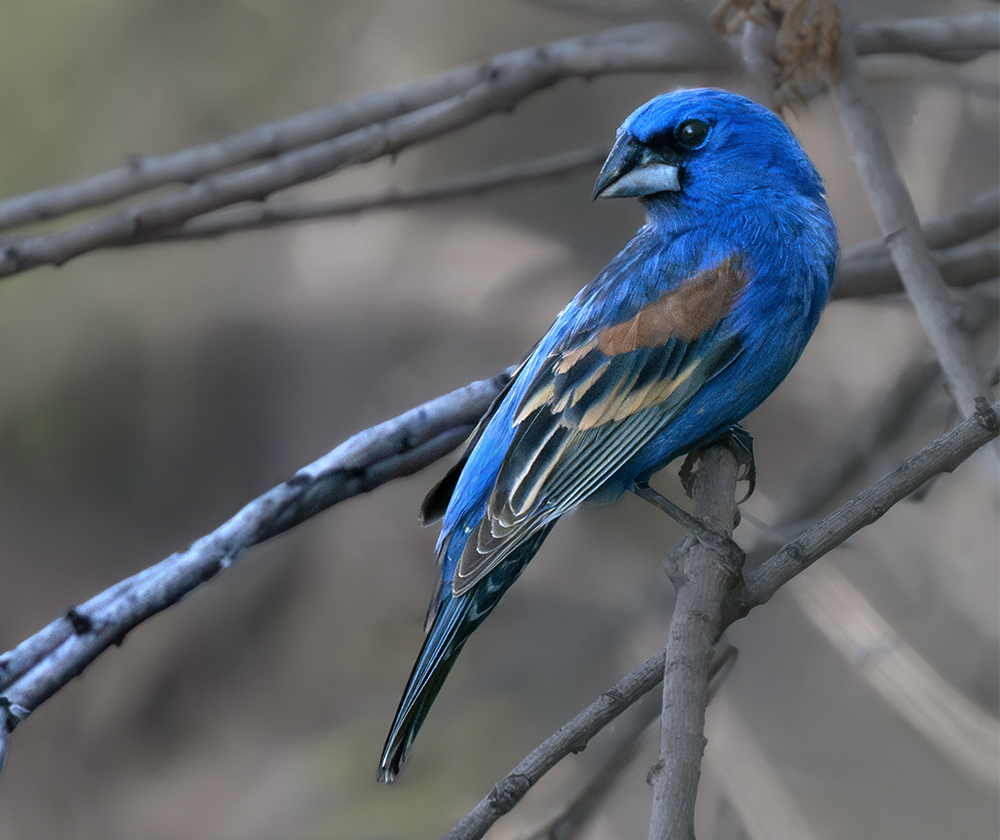
Adult males are strikingly beautiful, with deep cobalt-blue plumage set off by two bold chestnut wingbars, while females and juveniles are mostly warm brown with faint bluish highlights on the tail and wings. This sexual dimorphism makes the species easy to recognize during the breeding season.
Blue Grosbeaks feed mainly on seeds and insects, their heavy conical bills well adapted for cracking tough seed coats. During summer, they often hunt for grasshoppers, beetles, and caterpillars, especially when feeding young. The nest, a loosely built cup of grass and rootlets, is usually concealed within dense vegetation such as mesquite, saltbush, or young cottonwoods. Pairs often produce two broods per season, taking advantage of Arizona’s long warm months.
Though the Blue Grosbeak’s bold color and song make it conspicuous, its preference for brushy cover often keeps it hidden from view.
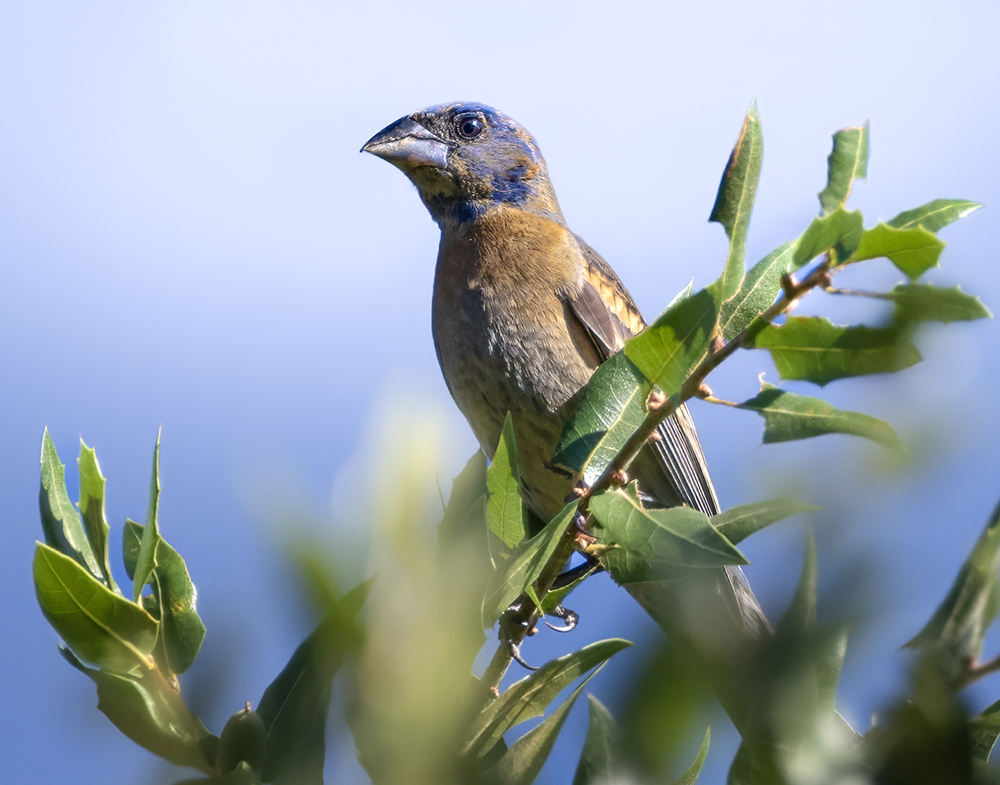
Female