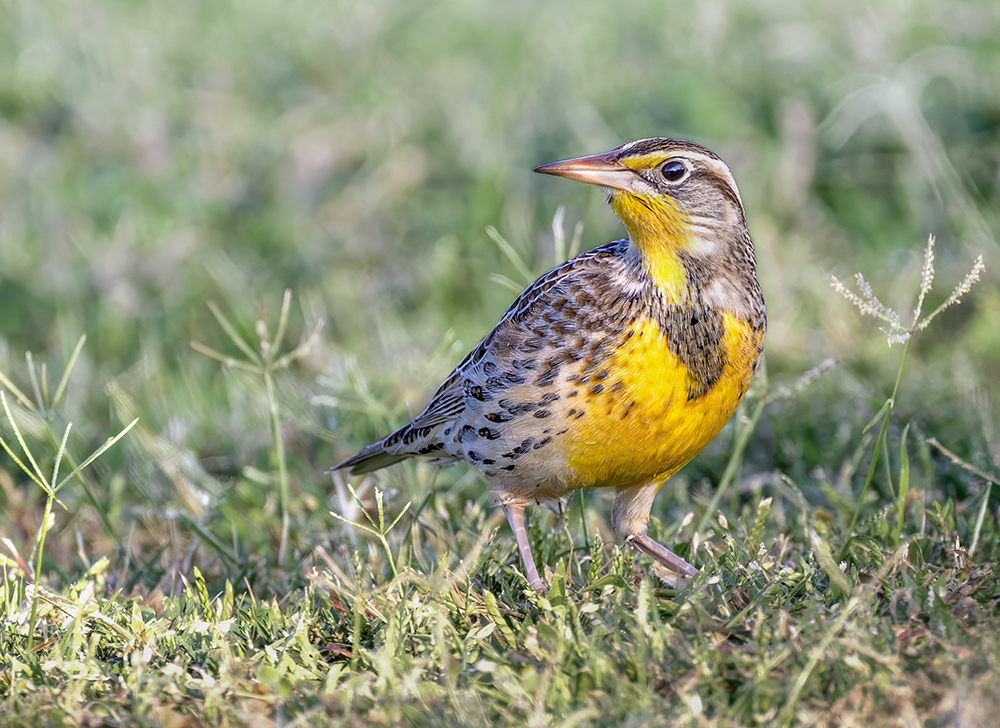
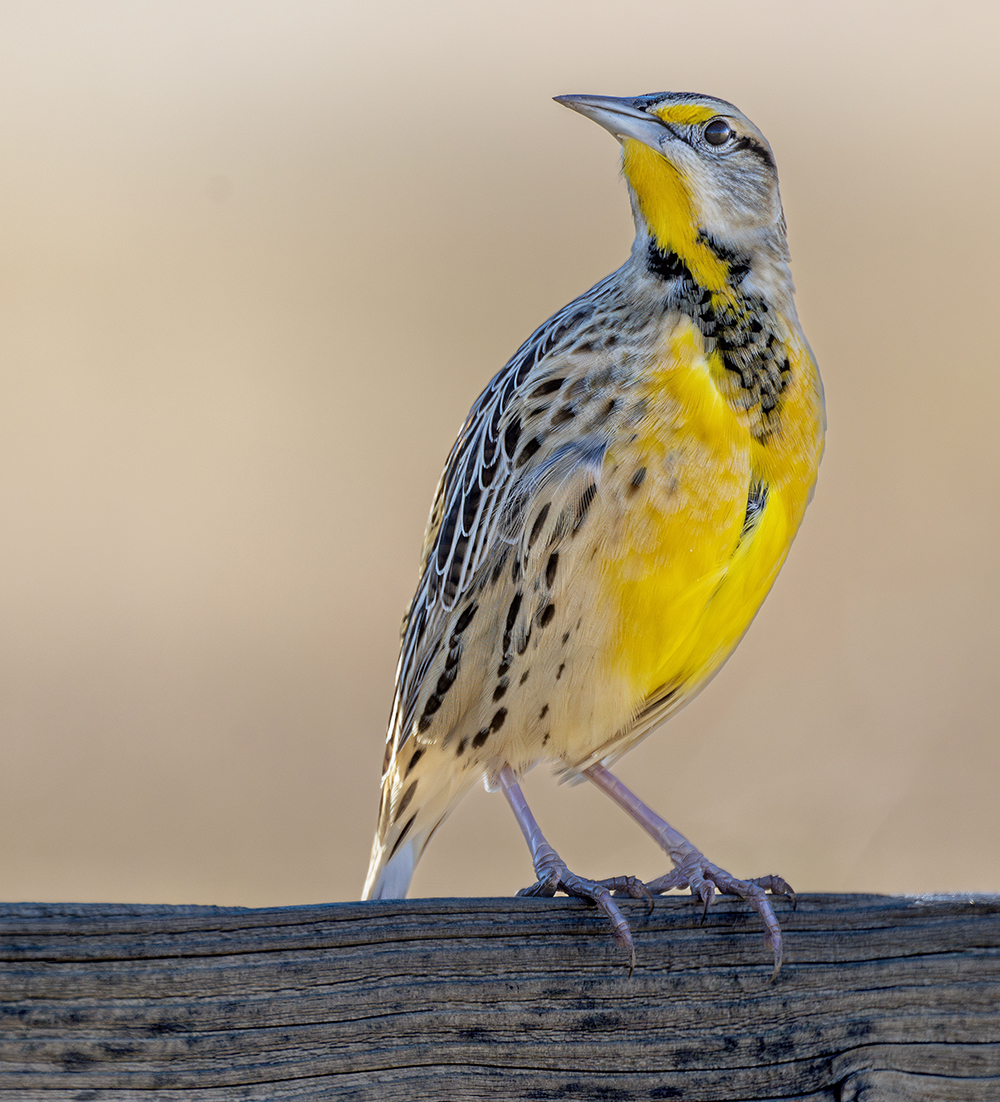
The Western Meadowlark is a familiar grassland bird found across Arizona’s open fields, prairies, agricultural lands, and desert valleys. Known for its bright yellow underparts with a bold black “V” on the chest, streaked brown upperparts, and melodious flute-like song, the species is a symbol of western North America’s open landscapes. It is slightly smaller than its close relative, the Eastern Meadowlark (Sturnella magna), and can be distinguished by its richer, more complex song and subtle plumage differences.
In Arizona, Western Meadowlarks are year-round residents, especially common in grasslands of the San Rafael Valley, agricultural areas of southeastern Arizona, and river valleys where open meadows provide foraging opportunities. They primarily eat insects such as grasshoppers, beetles, and caterpillars during the breeding season, while switching to seeds and grains in winter. Nests are well-hidden on the ground among grasses, often with a woven canopy of vegetation for concealment.
This species plays an important ecological role in controlling insect populations and serves as an indicator of healthy grassland ecosystems. Despite declines in some regions due to habitat loss and agricultural intensification, Western Meadowlarks remain fairly widespread in Arizona.