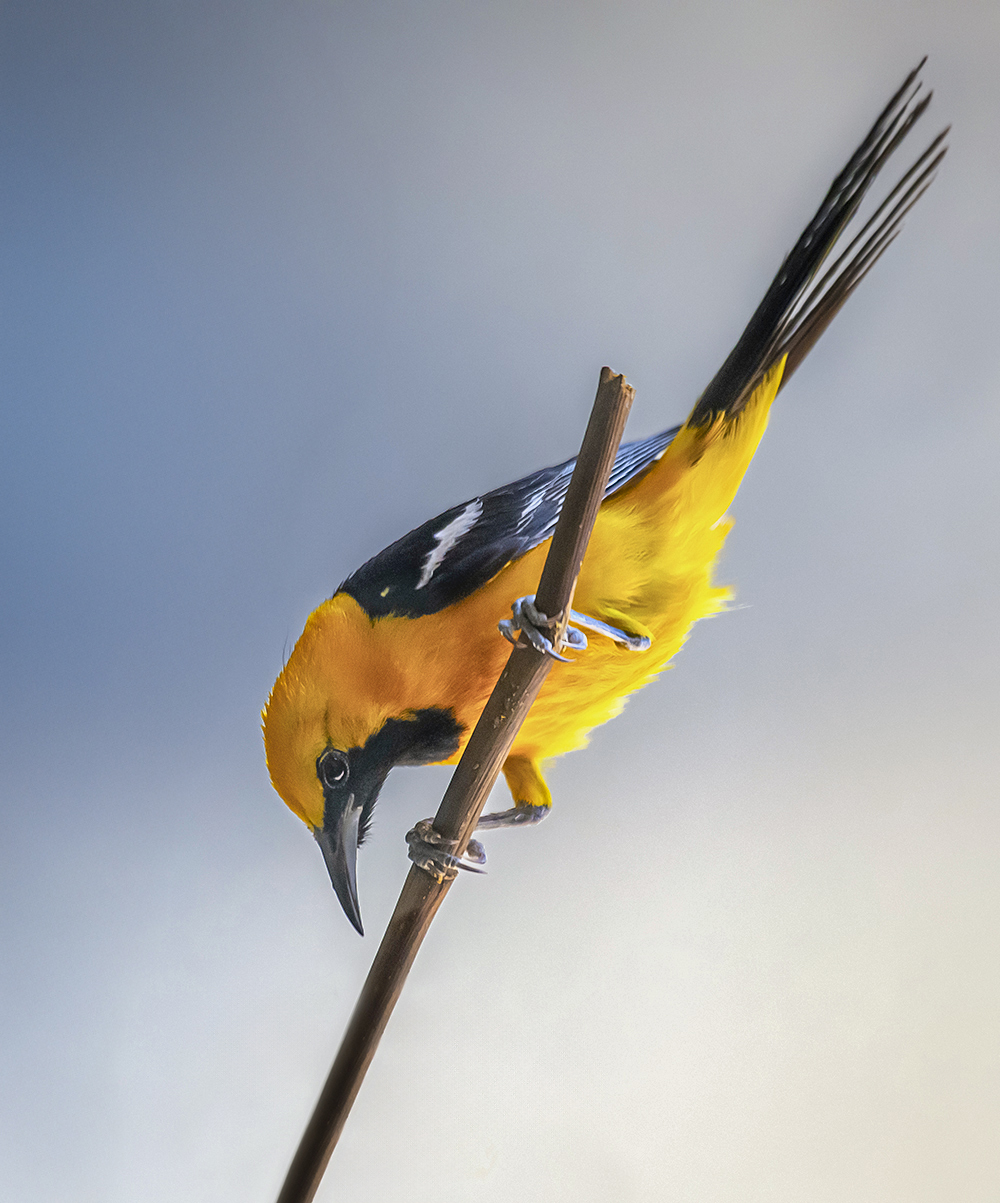
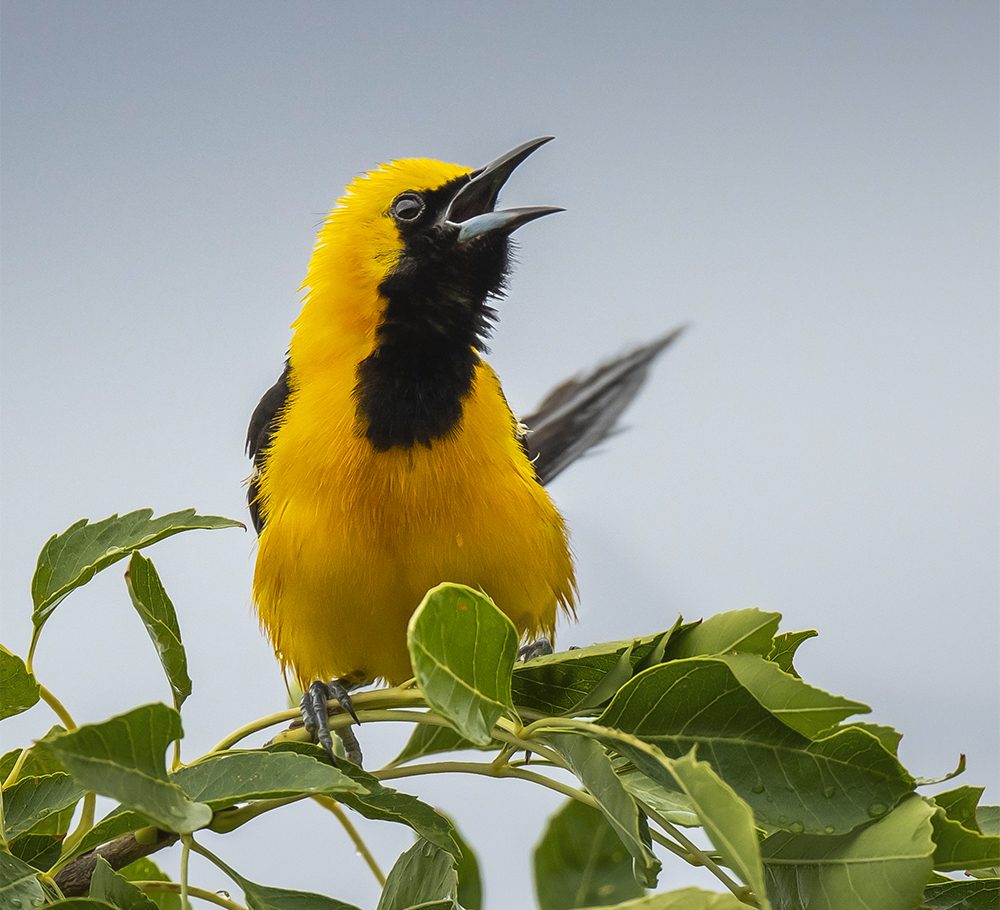
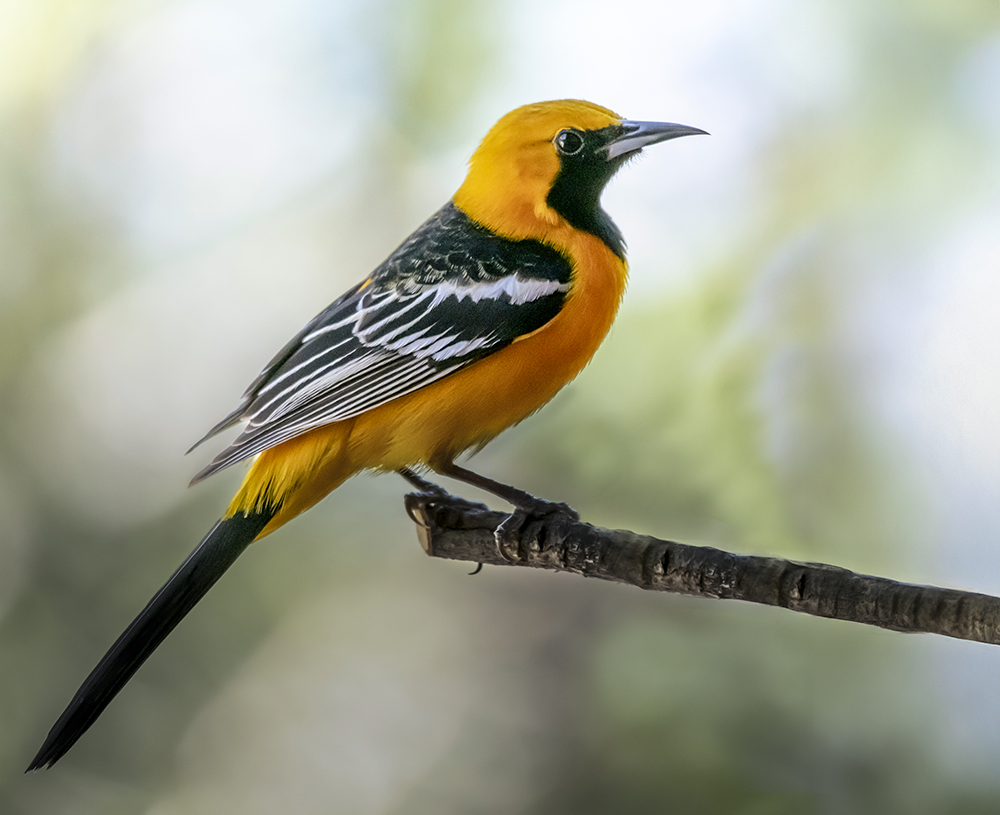
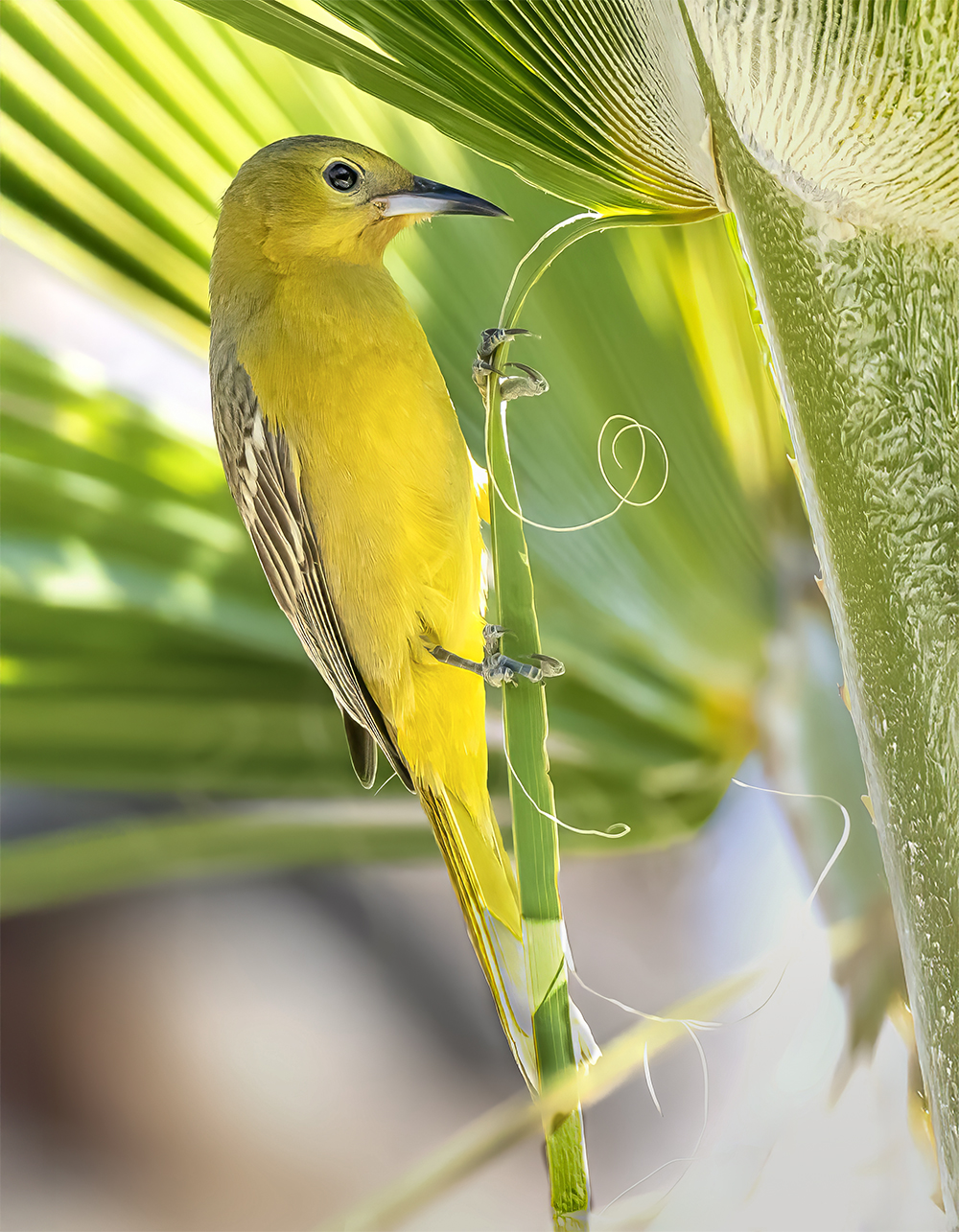
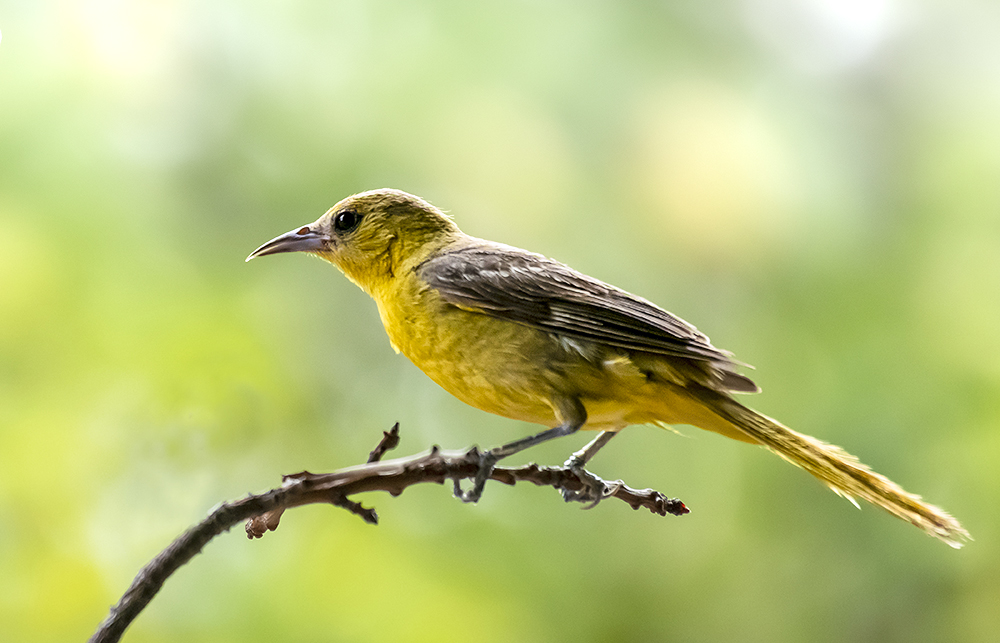
The Hooded Oriole (Icterus cucullatus) is a striking blackbird of the Southwest that reaches the northern edge of its range in Arizona. Adult males are vivid orange to yellow-orange with a black throat, bib, and back, contrasting sharply with white wing bars and a long, slightly decurved bill. Females and immatures are duller, usually yellow-green to pale orange with gray wings and less black on the face.
In Arizona, Hooded Orioles breed mainly in the low desert regions, where they are closely tied to ornamental and native palms, cottonwoods, sycamores, and other tall trees near water or in urban areas. They often weave their distinctive basket-shaped nests, suspended under palm fronds or thin branches, using fibers from yucca, agave, and grasses.
These orioles arrive in spring from wintering grounds in Mexico and Central America, and they typically remain in Arizona from March through September before migrating south. They feed on nectar, fruit, and insects, and are frequent visitors to backyard feeders offering sugar water or cut fruit.
Though common in desert cities such as Tucson and Phoenix, their presence drops sharply at higher elevations, and they are rarely seen in northern Arizona. Their preference for palms has allowed them to expand in some areas with urban landscaping. Overall, the Hooded Oriole is considered a regular and colorful breeding species in southern Arizona.