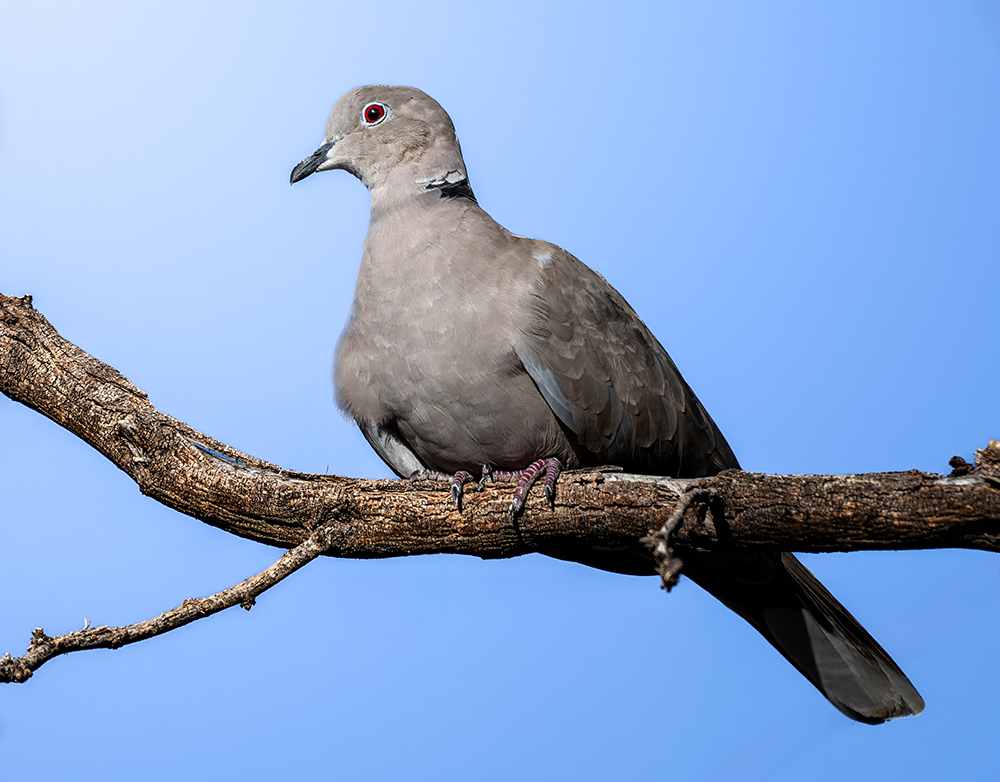
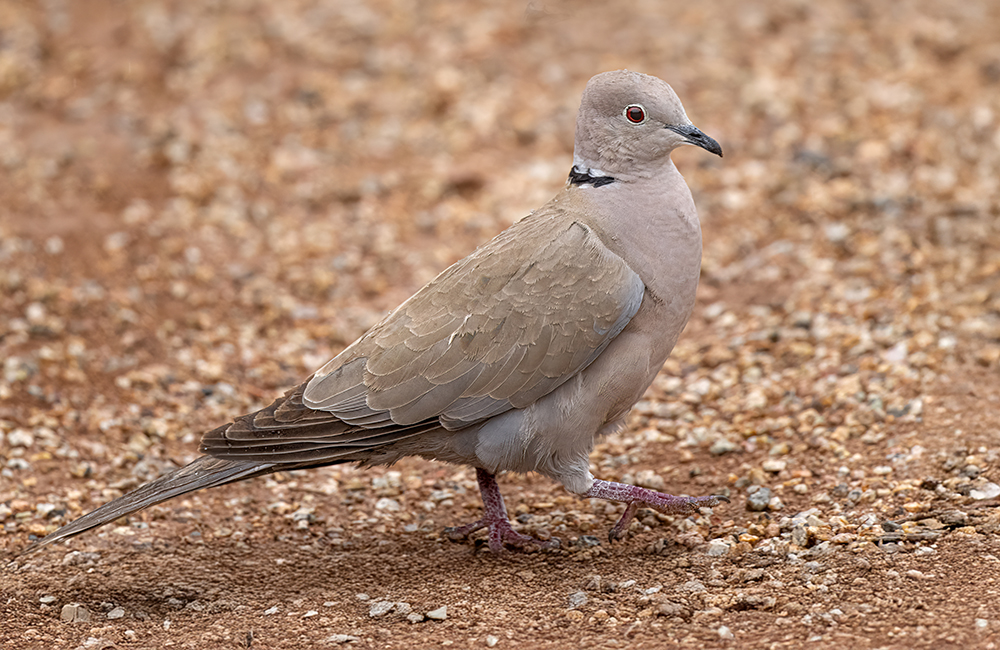
The Eurasian Collared-Dove is a medium-sized dove, about 12–14 inches long, that has become widespread in Arizona since its arrival in the state during the late 20th century. Native to southern Asia and Europe, it spread rapidly across Europe during the 20th century and then colonized North America after being introduced in the Bahamas in the 1970s. By the 1990s it was first reported in Arizona, and it is now a common urban and suburban dove in the state. Recognizable by its pale gray-tan plumage, long square-tipped tail, and distinctive narrow black collar on the back of the neck, it is often confused with the native Mourning Dove (Zenaida macroura), but the collared-dove is larger, bulkier, and lacks the long tapered tail. In Arizona, Eurasian Collared-Doves thrive in towns, farms, and residential areas where food sources such as grain and bird feeders are abundant. They are year-round residents and have adapted well to human-altered landscapes, frequently nesting on man-made structures and producing multiple broods each year. Though not native, their presence has not been shown to strongly displace native dove species, but their explosive population growth highlights how quickly an introduced species can establish itself in favorable habitats.