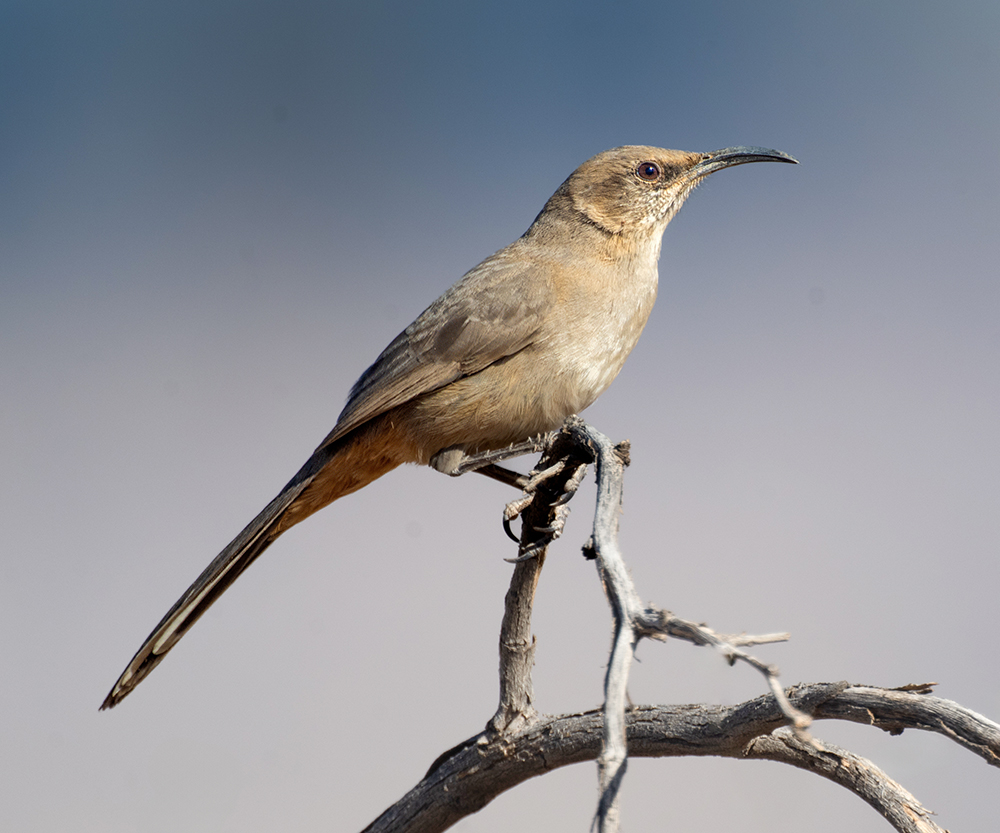
LeConte’s Thrasher is a rare and localized resident of southwestern Arizona, confined to some of the hottest and driest desert valleys. This pale gray-brown thrasher is well adapted to sparsely vegetated desert flats, especially areas dominated by creosote bush (Larrea tridentata) and saltbush (Atriplex spp.). It is more secretive than the other Arizona thrashers and is often detected by its sharp whistled calls or long, musical song delivered from a perch early in the morning.
In Arizona, Toxostoma lecontei occurs mainly in the lower Colorado River Valley and the valleys west and north of Phoenix, where suitable open desert habitat exists. Unlike Curve-billed Thrashers (Toxostoma curvirostre) or Bendire’s Thrashers (Toxostoma bendirei), LeConte’s Thrasher spends much of its time on or near the ground, running swiftly between low shrubs and foraging for insects and other invertebrates in the soil. Its pale coloration provides effective camouflage against desert sands and gravels.
This species has a relatively restricted range in the state and is considered vulnerable to habitat loss and degradation. Urban expansion, off-road vehicle use, and invasive plant species that alter desert structure pose threats to its long-term persistence in Arizona.