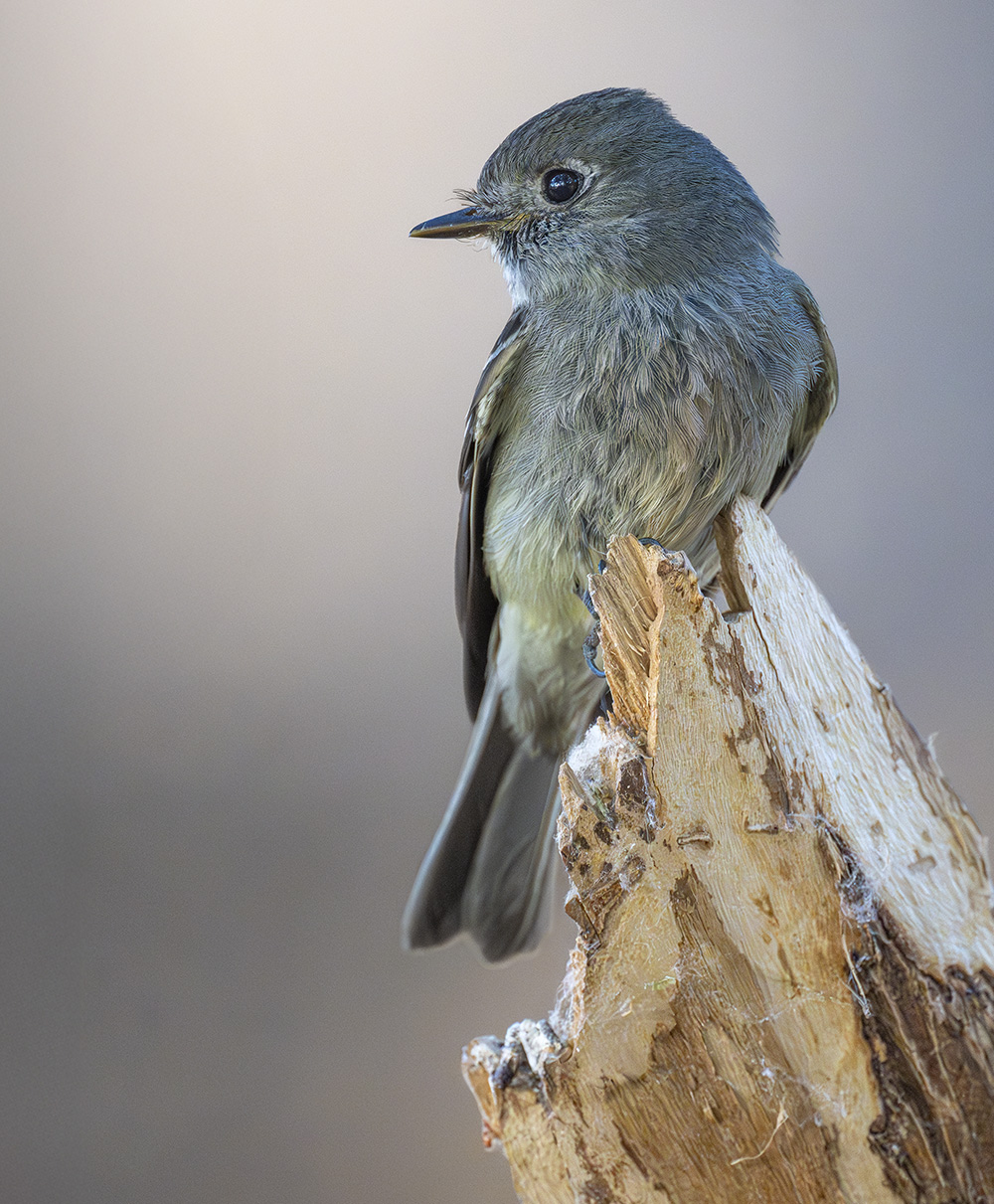
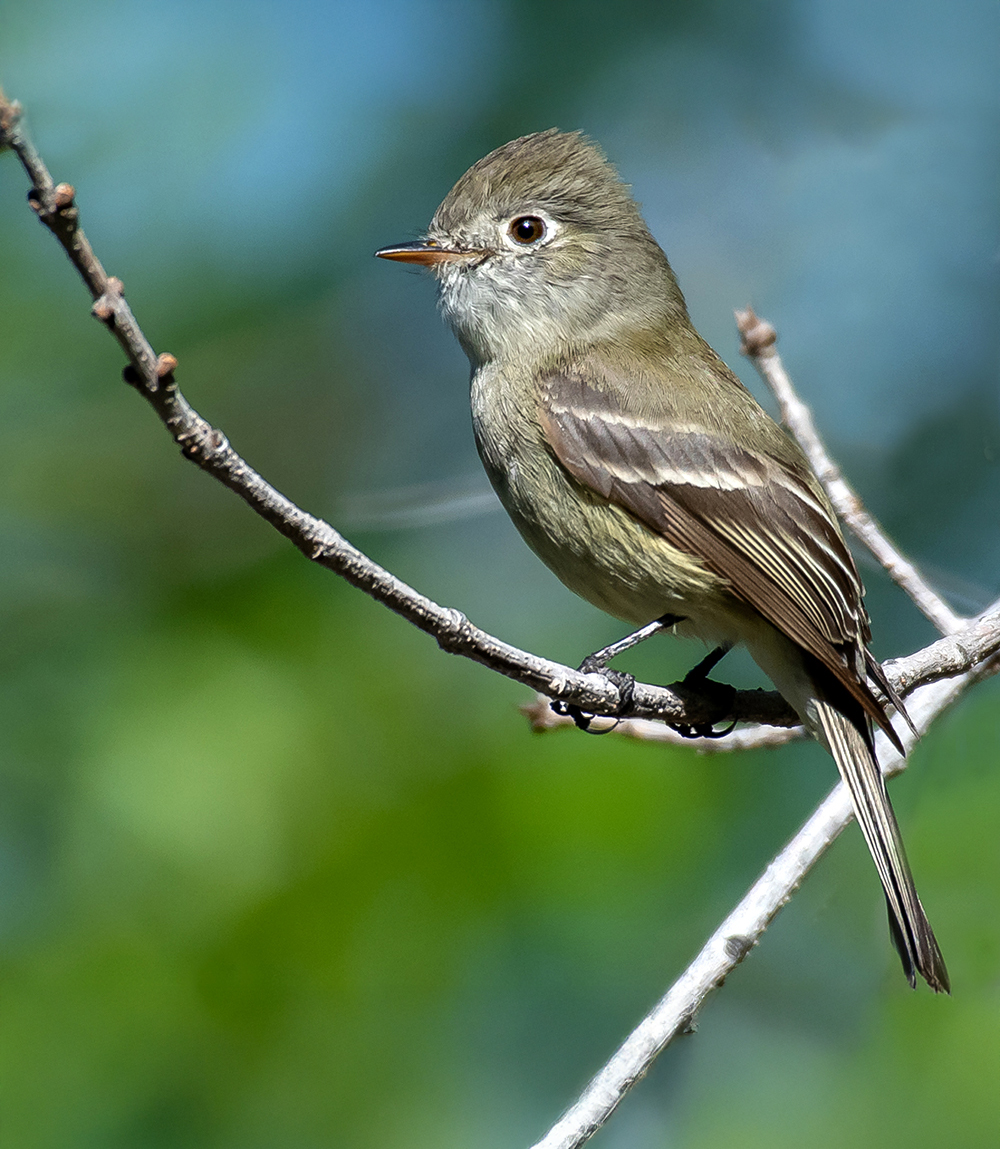
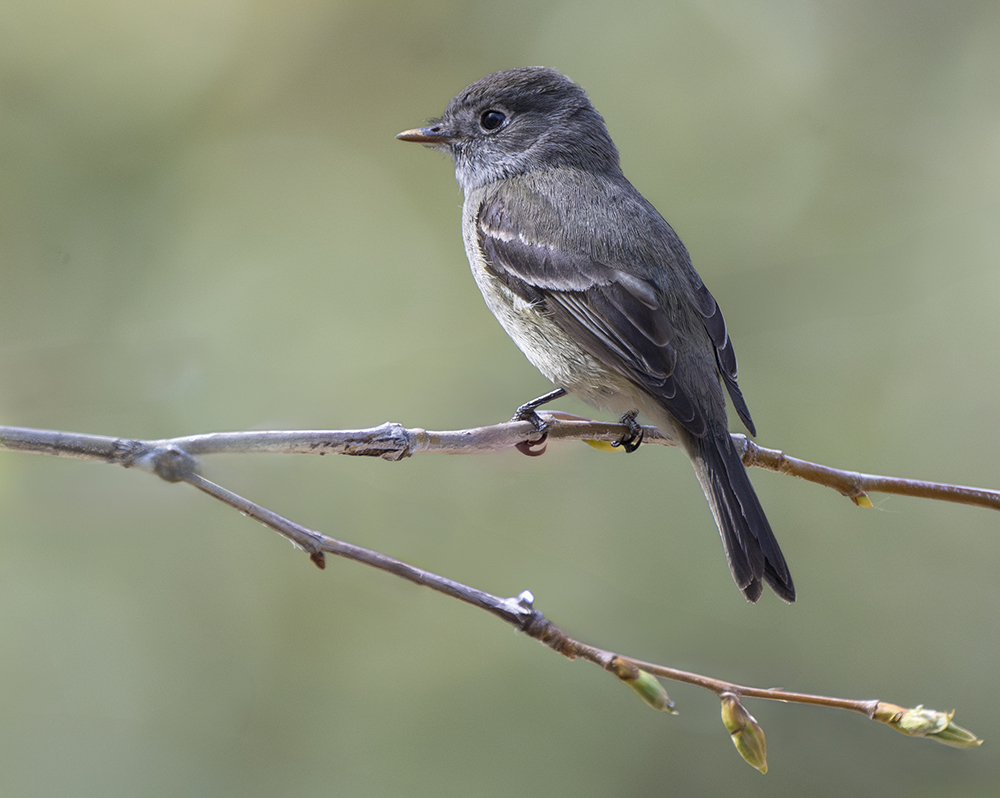
Hammond’s Flycatcher is a small, slender member of the tyrant flycatcher family that occurs in Arizona mainly as a migrant and uncommon summer breeder in higher elevations. This species is best identified by its grayish head and upperparts, pale throat, whitish underparts washed with a faint yellow on the belly, and a thin, pointed bill. Like other Empidonax flycatchers, it can be difficult to distinguish from similar species such as Dusky Flycatcher (Empidonax oberholseri) and Gray Flycatcher (Empidonax wrightii), with subtle differences in voice being the most reliable field mark.
In Arizona, Empidonax hammondii is typically found during spring and fall migration in a range of wooded habitats, including riparian corridors, oak woodlands, and coniferous forest edges. A few remain to breed in montane spruce-fir and mixed conifer forests, especially in the higher elevations of the Mogollon Rim, White Mountains, and the “Sky Islands” of southeastern Arizona. During migration, they are more widespread and may be seen in desert riparian areas and foothill canyons.
This flycatcher feeds mainly on insects, which it gleans or captures on short aerial sallies from exposed perches. The species is generally quiet and inconspicuous, though during the breeding season males give a sharp, high-pitched “peek” and a series of thin, whistled songs. In Arizona, the presence of Empidonax hammondii contributes to the diversity of montane bird communities, and its seasonal movements reflect the importance of forested mountain habitats as migratory stopovers in the state.