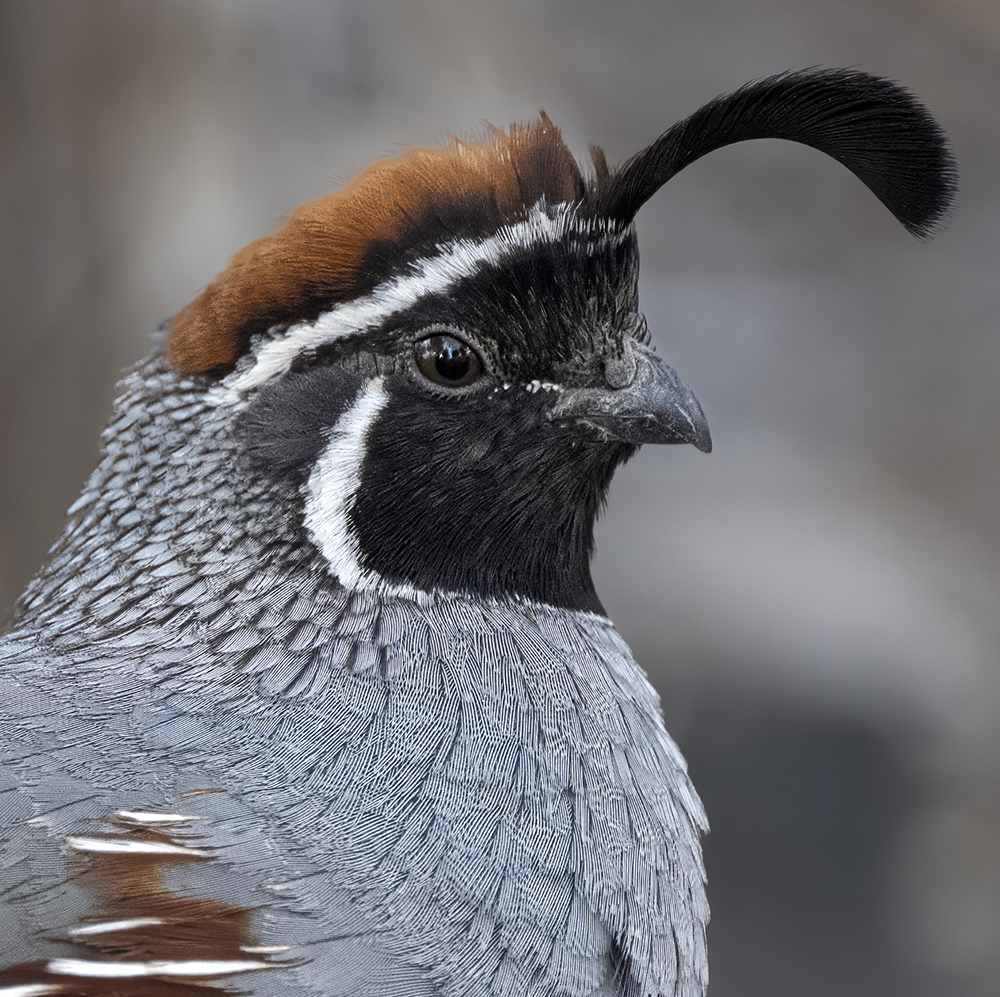
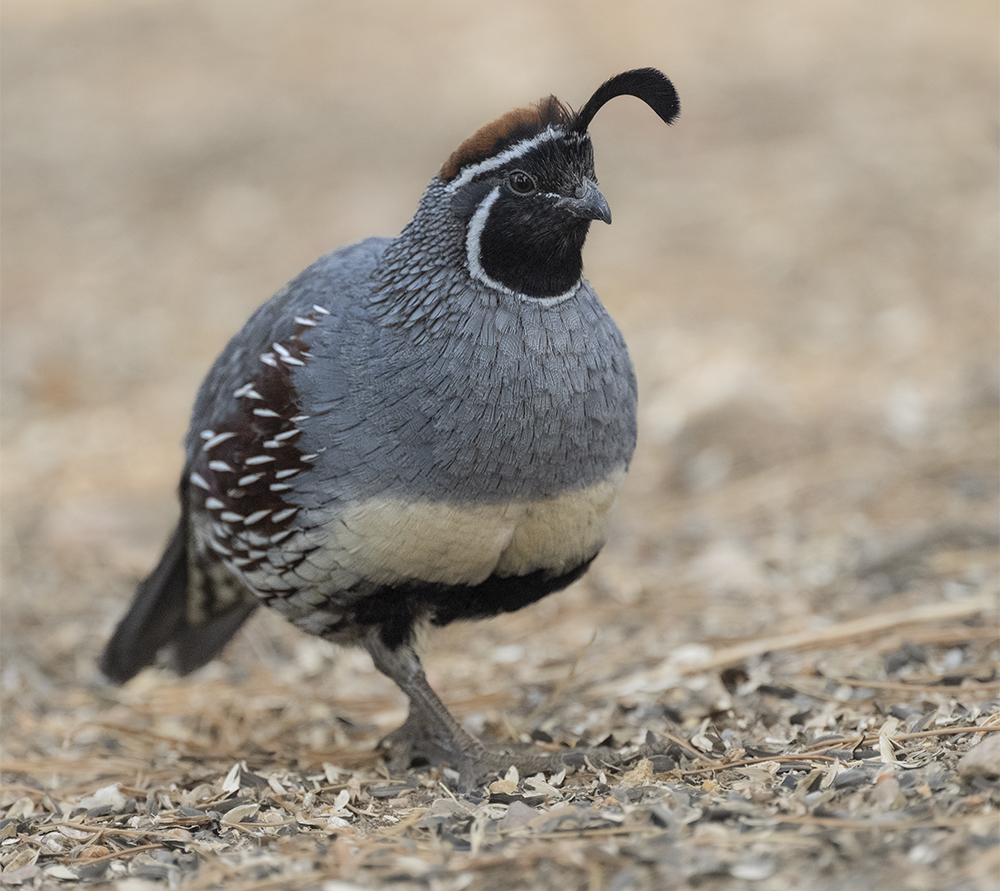
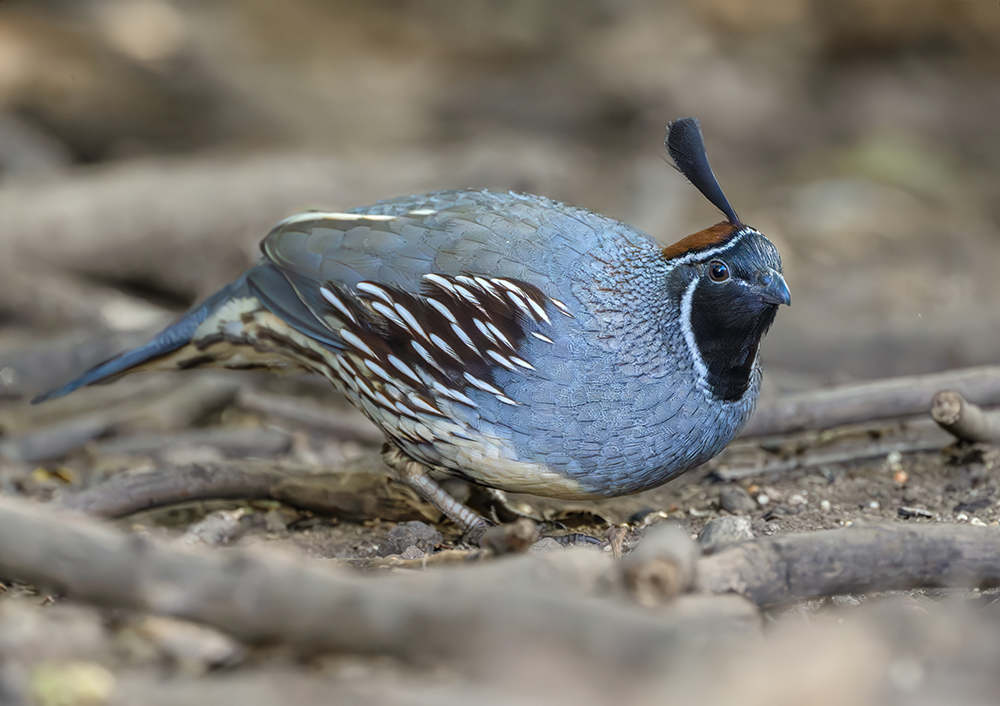
The Gambel’s Quail is one of Arizona’s most familiar desert birds, often seen scurrying through arid washes, mesquite thickets, and suburban neighborhoods. Recognizable by its forward-curving black topknot, the species displays striking plumage: males have a rich chestnut cap, bold black face and throat, and scaled gray underparts, while females are more subdued in coloring but share the same distinctive head plume.
These ground-dwelling birds are highly social, typically foraging in coveys that can number a dozen or more, especially outside the breeding season. They primarily feed on seeds, leaves, and fruits of desert plants such as mesquite and cactus, supplemented by insects in spring and summer. Adapted to dry habitats, Gambel’s Quail often obtain much of their water from succulent vegetation, though they will also visit water sources when available.
Breeding occurs in spring, when males call with a loud, nasal “ka-KAA-ka-ka” from elevated perches. Nests are shallow scrapes hidden under shrubs or grass clumps, where females lay large clutches—often 10 to 15 eggs. The species is resident year-round across much of Arizona, especially in lowland deserts of the Sonoran region, making it an iconic bird of the state’s arid landscapes.