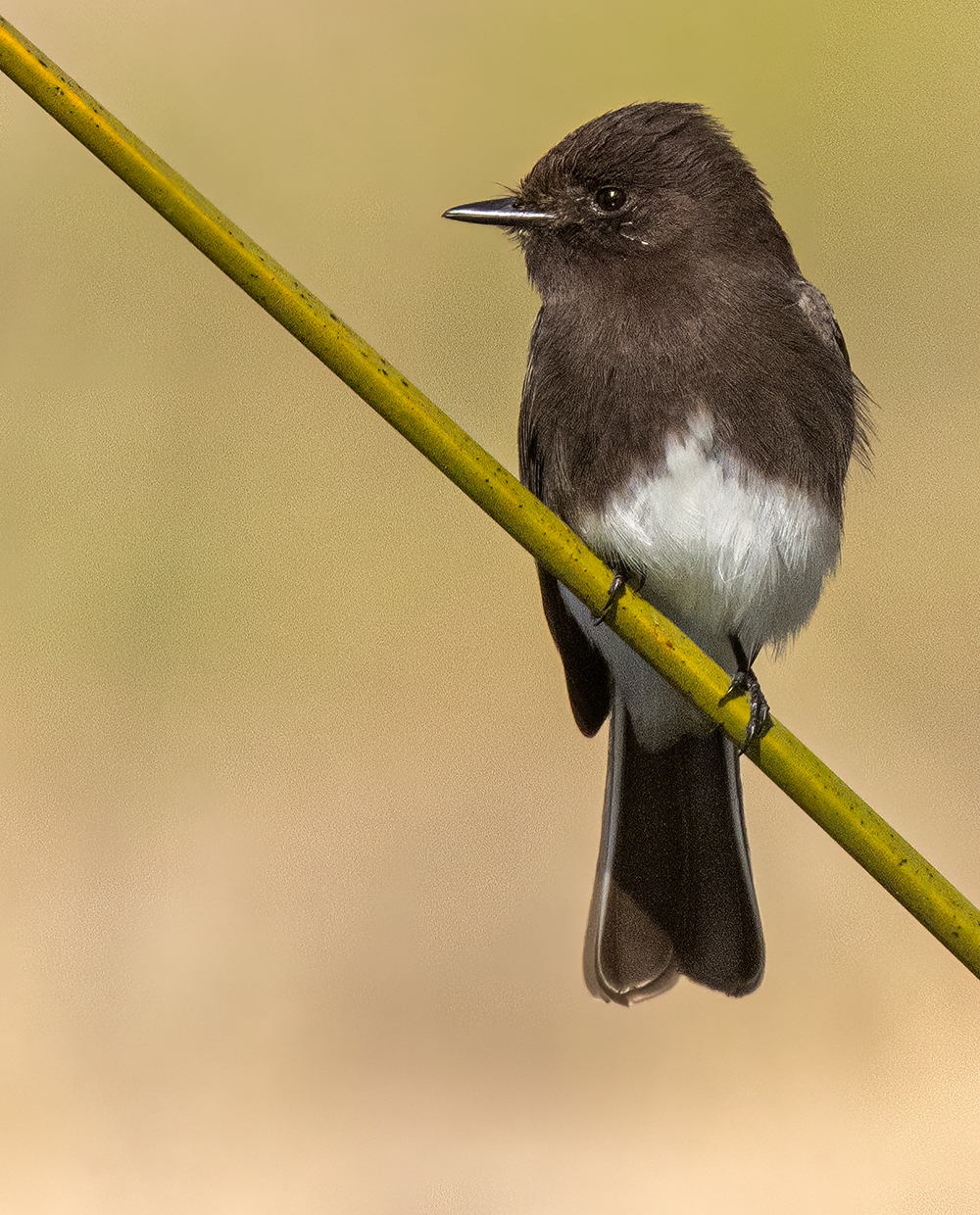
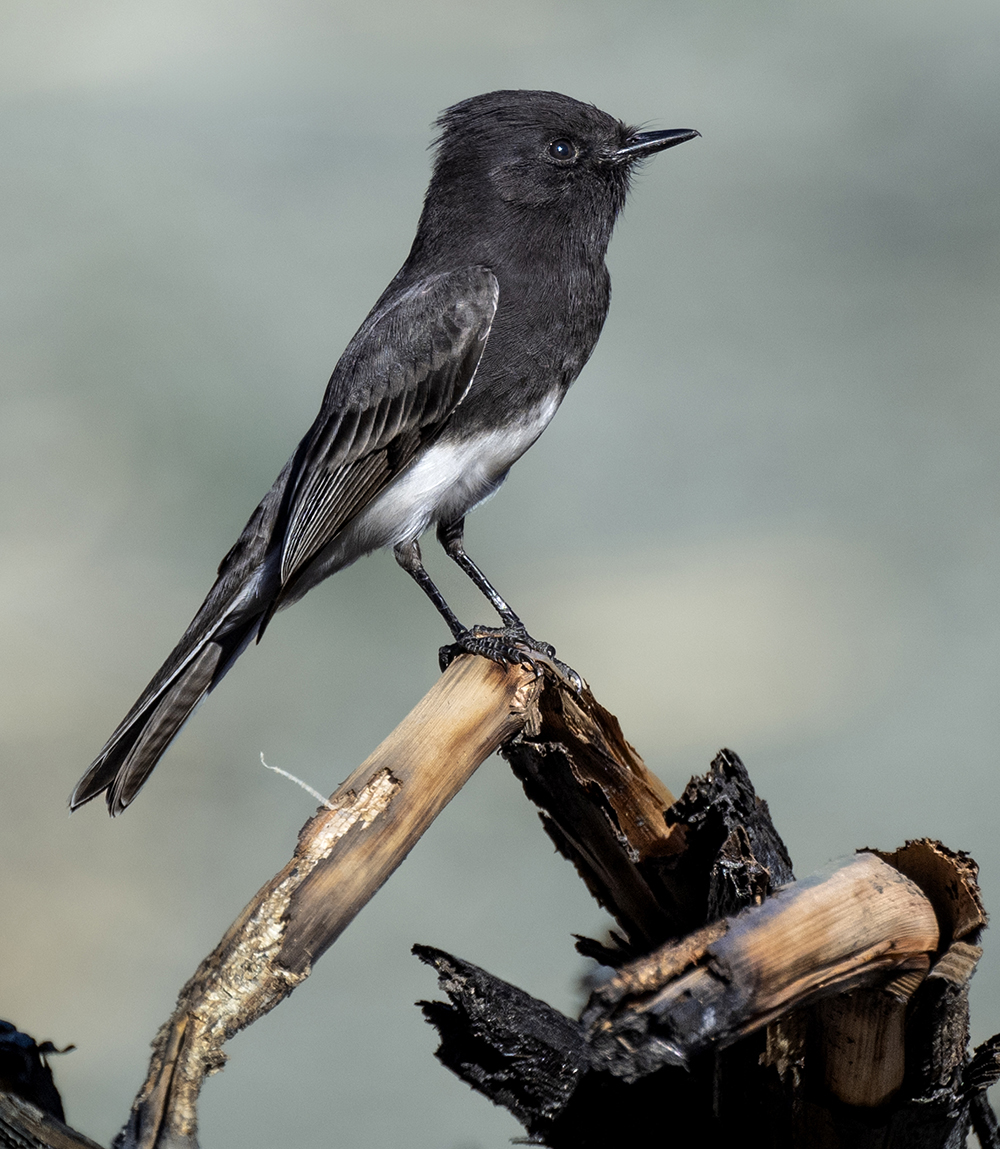
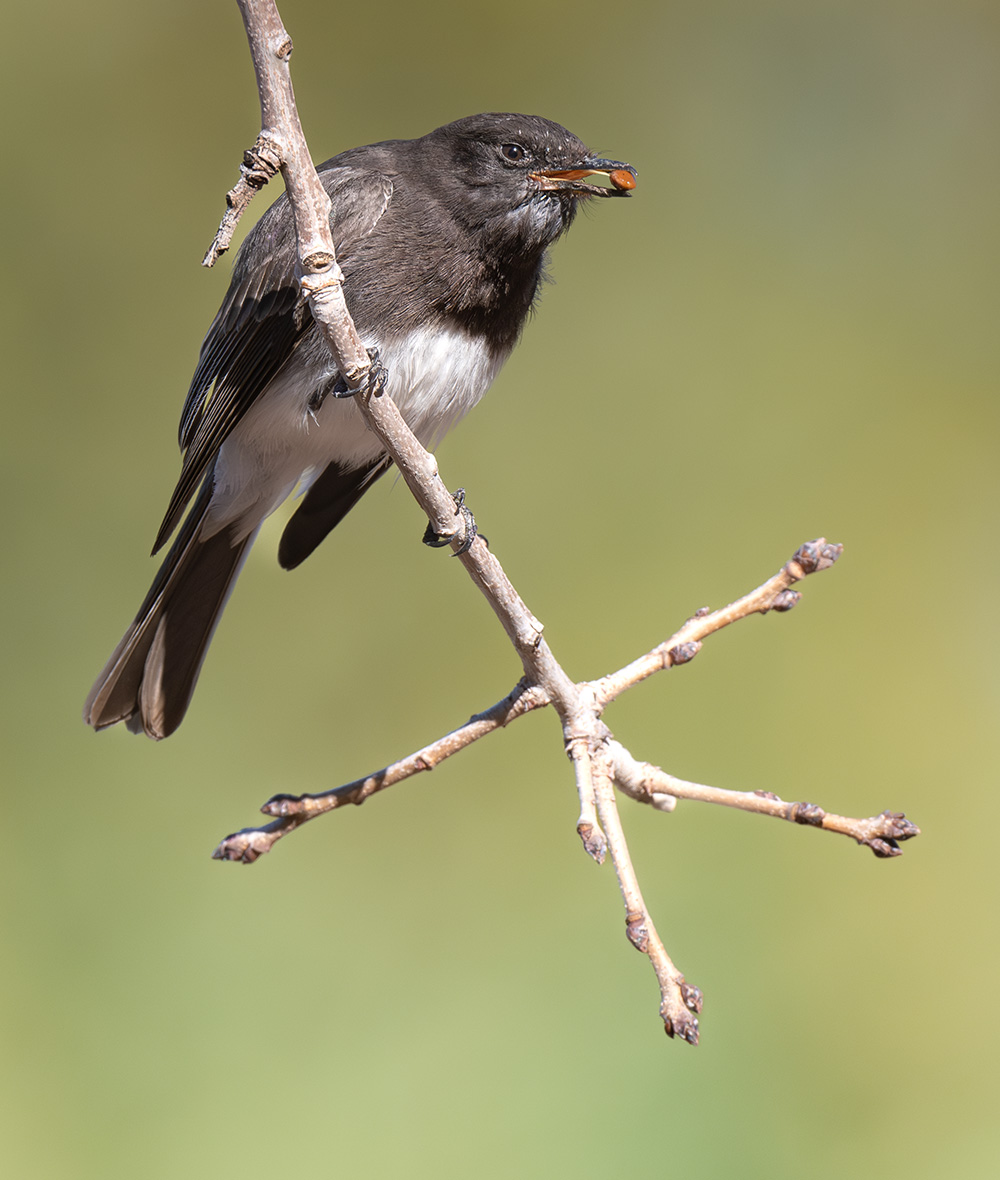
The Black Phoebe is a familiar flycatcher that occurs widely across Arizona, especially in areas where water is present. This small, dark-colored bird is typically found near streams, ponds, lakes, irrigation ditches, and even urban fountains, where it can be seen perching low and making short sallies to catch flying insects. Its striking appearance—black head, breast, and upperparts contrasting with a clean white belly—makes it easy to identify.
In Arizona, Sayornis nigricans is a year-round resident, most common in the southern and central regions of the state, including riparian corridors and desert oases. It also occurs in agricultural areas and suburban habitats where water features provide suitable foraging opportunities. Although strongly associated with aquatic environments, it occasionally ranges into drier landscapes as long as small water sources are available.
The species is known for its distinctive behavior of tail-dipping while perched, often accompanied by sharp, high-pitched “tsip” calls. Black Phoebes (Sayornis nigricans) construct mud nests, usually placed under bridges, culverts, or building overhangs, where moisture and shade help maintain structural integrity. Breeding pairs are territorial, and nesting activity in Arizona typically begins in spring, with some pairs raising multiple broods through summer.