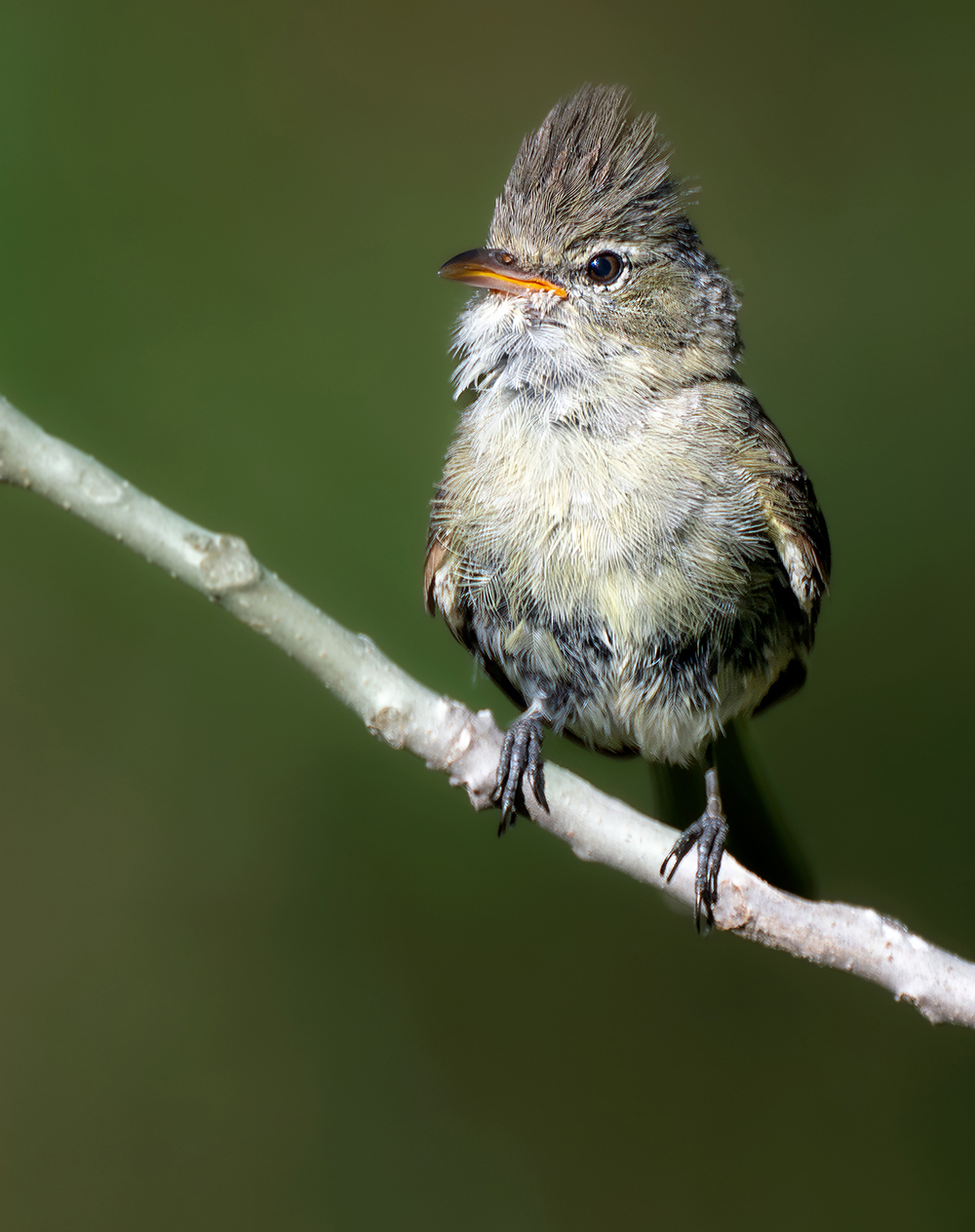
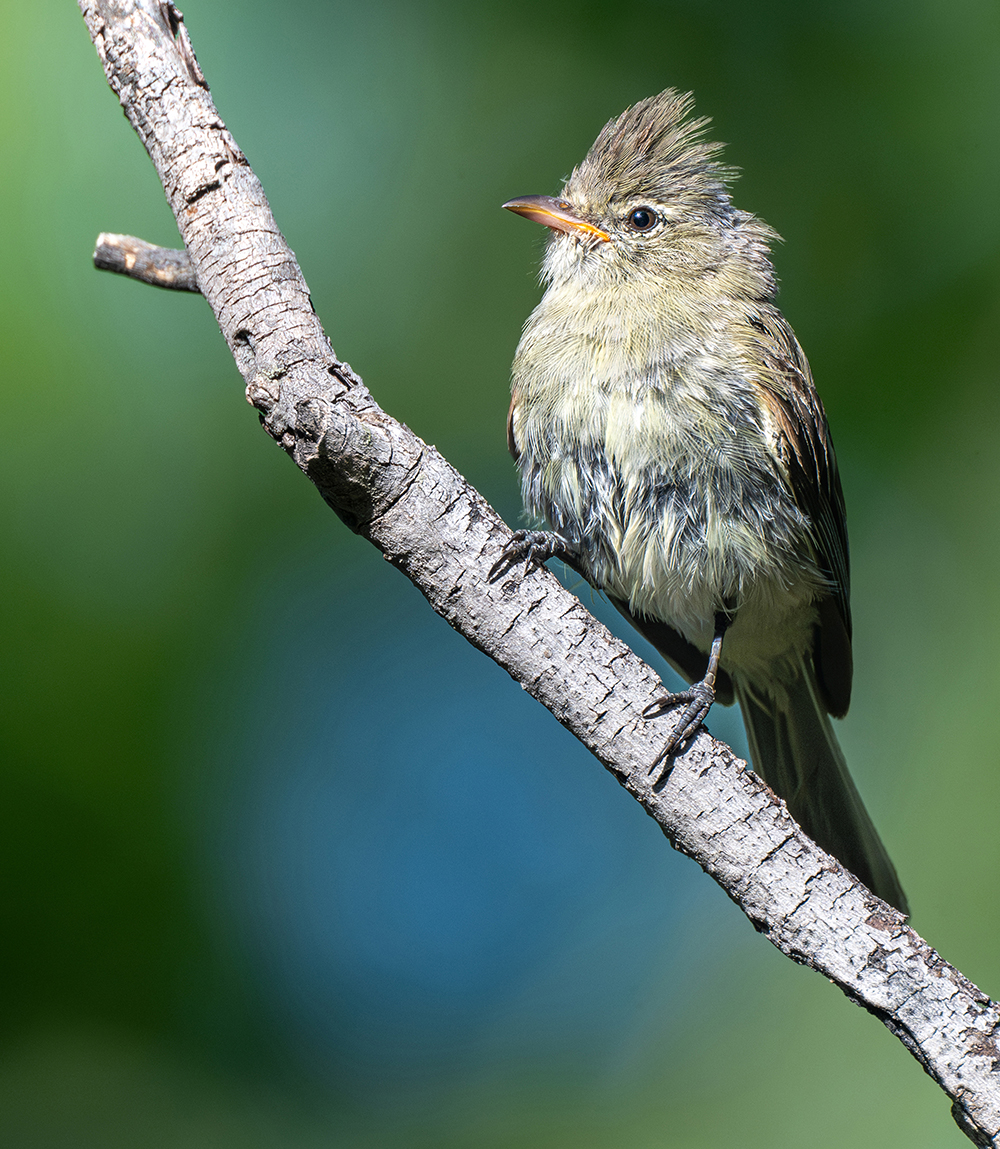
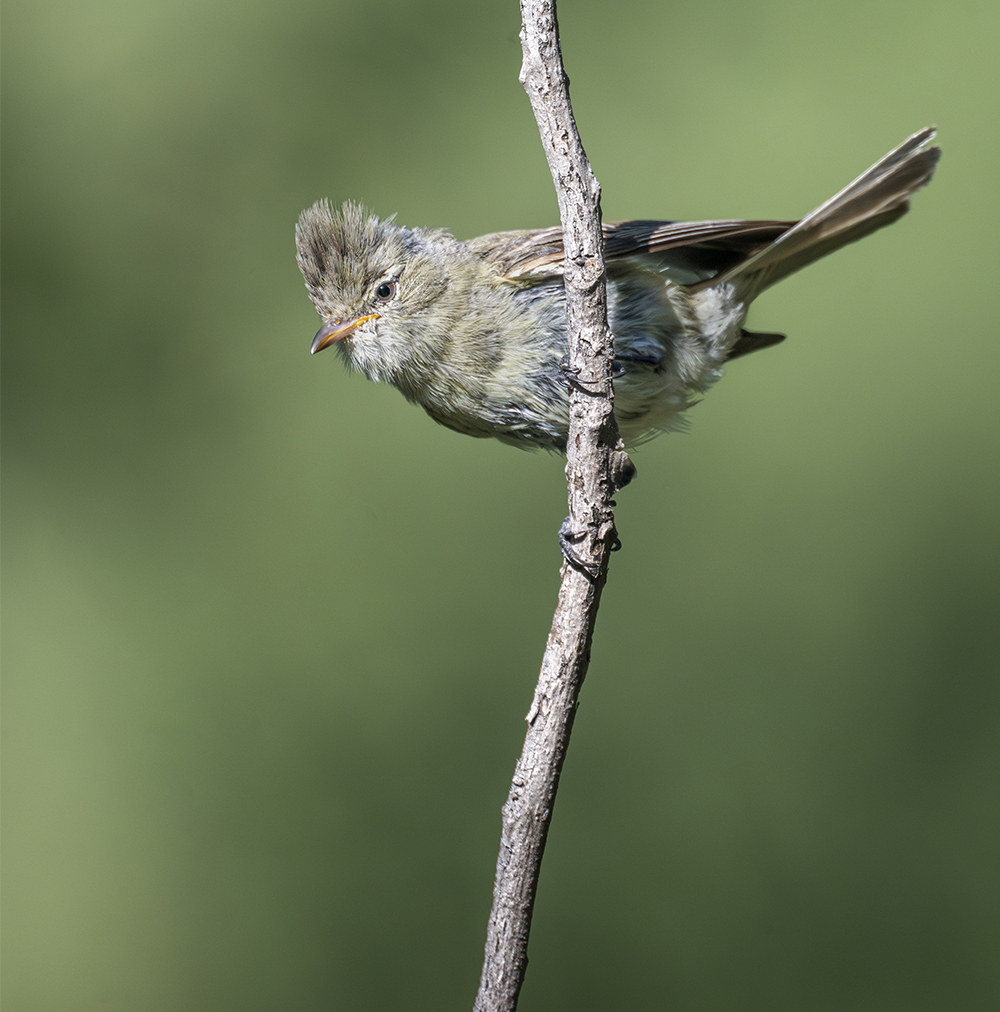
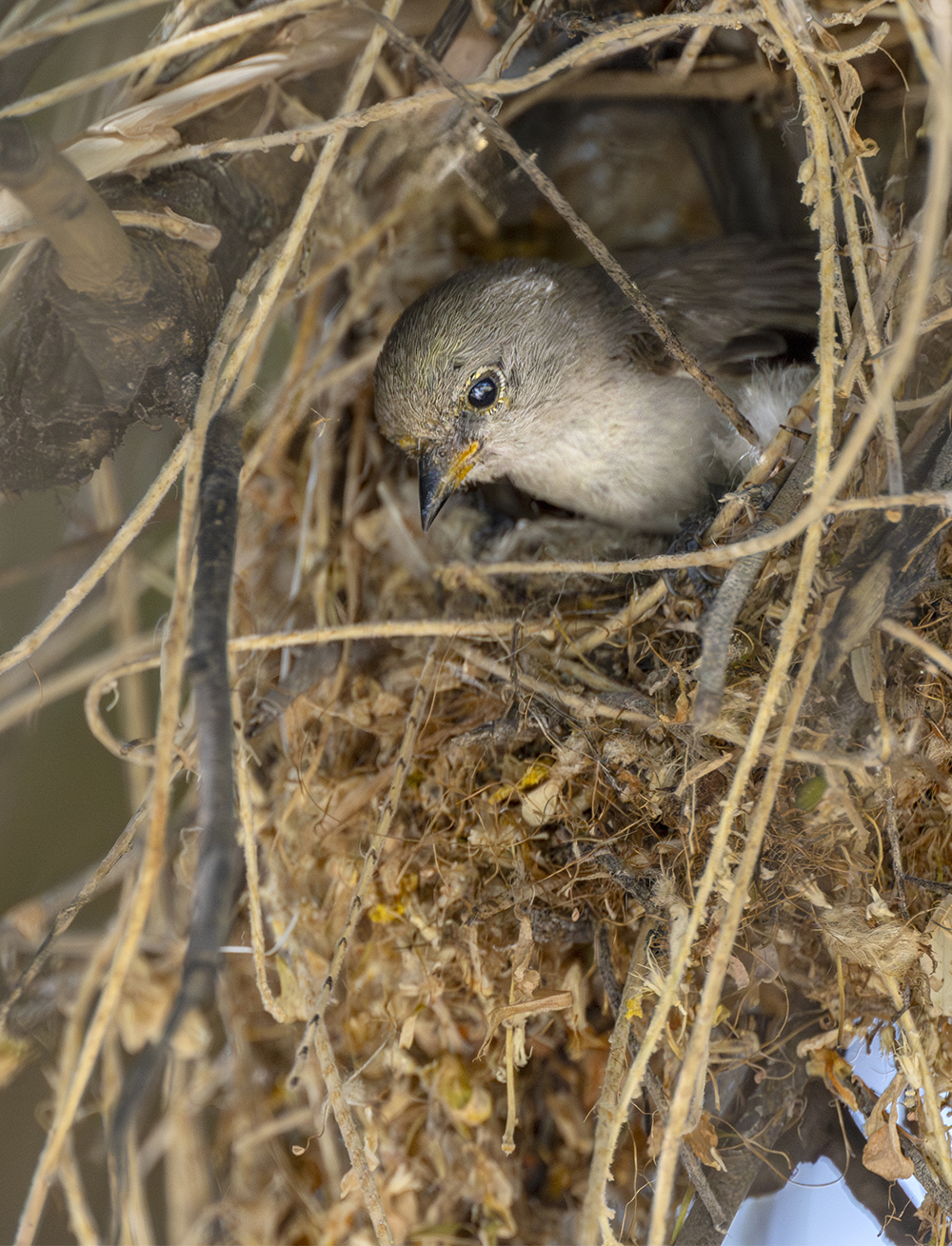
The Northern Beardless-Tyrannulet is one of Arizona’s smallest flycatchers and a distinctive resident of the state’s southern borderlands. Measuring only about 4 inches (10 cm) in length, this diminutive bird is characterized by its short, rounded wings, relatively long tail, and a plain grayish-olive body with a faint eyering. Unlike many flycatchers, Camptostoma imberbe has a very small, barely noticeable bill, which contributes to its “beardless” name.
In Arizona, the Northern Beardless-Tyrannulet is found primarily in riparian corridors and mesquite bosques of the southern deserts, particularly in Santa Cruz, Pima, and Cochise counties. It is most often encountered in low-elevation habitats near the U.S.–Mexico border, where it reaches the northernmost extent of its range. The species is a year-round resident in Mexico and Central America, but its occurrence in Arizona is restricted and considered rare to uncommon, depending on the year.
Behaviorally, Camptostoma imberbe is an active and vocal bird, frequently flitting about tree canopies while giving a high-pitched, buzzy call. It feeds mostly on small insects, which it gleans from leaves or captures in short sallies. Breeding records in Arizona are limited, though nesting has been confirmed in mesquite woodlands, with small cup-shaped nests placed in forks of branches.
Because of its small size and unassuming plumage, the Northern Beardless-Tyrannulet (Camptostoma imberbe) can be easily overlooked. However, for birders in Arizona, it is a prized species, both for its scarcity within the state and for its status as a unique representative of subtropical flycatchers reaching into the U.S.