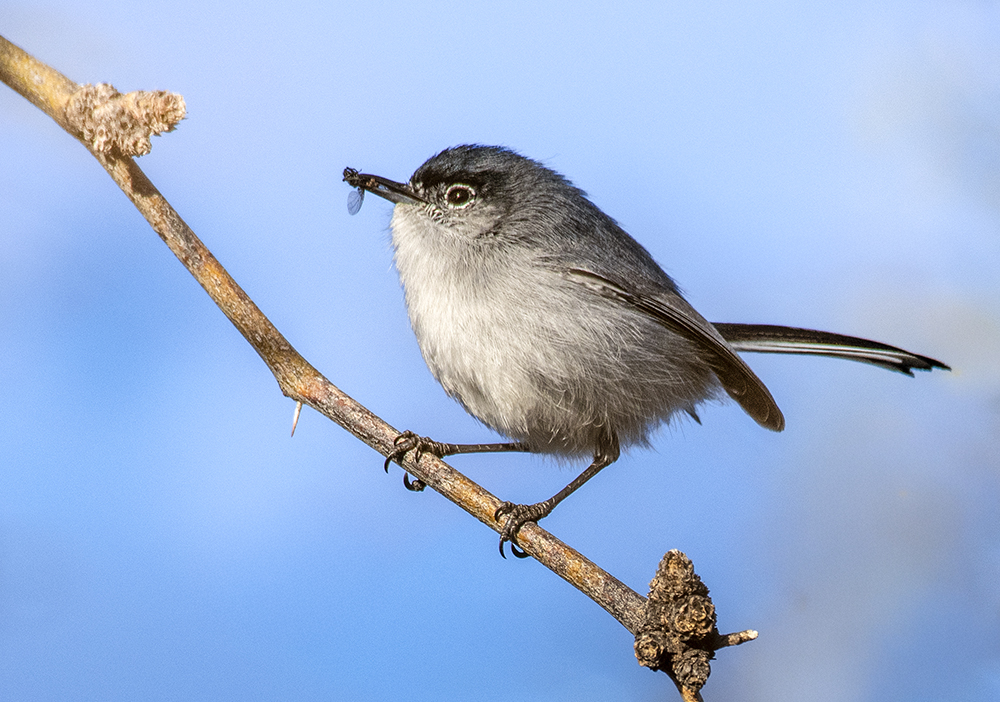
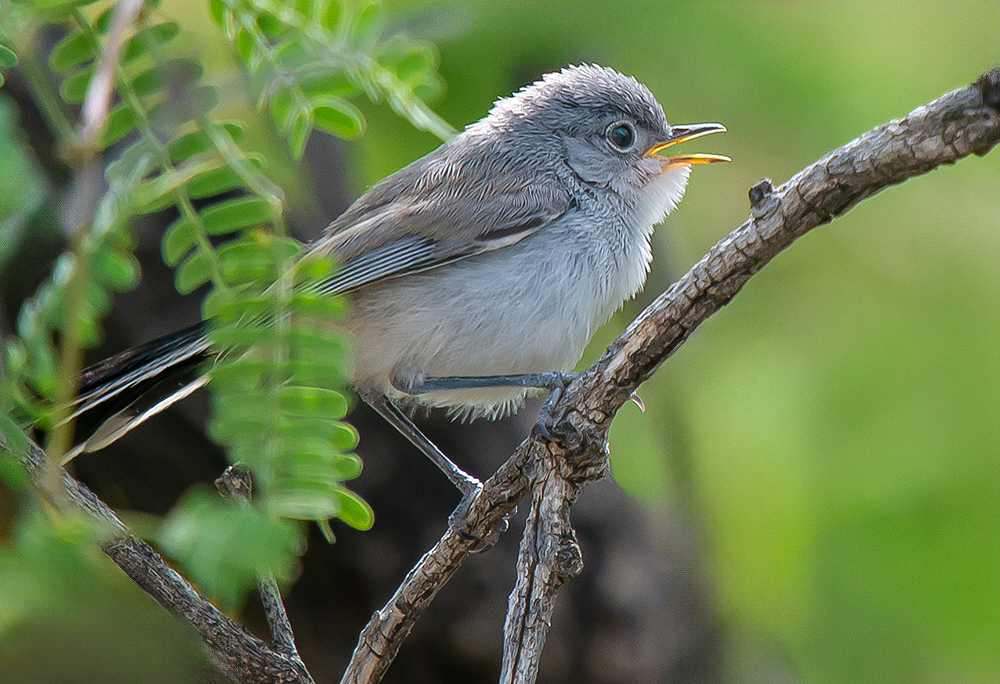
The Blue-gray Gnatcatcher is a small, active songbird widely distributed across Arizona, especially during the breeding season. Recognizable by its bluish-gray upperparts, white underparts, and long black-and-white tail, this species is often seen flitting about in search of insects. In Arizona, it breeds in riparian woodlands, oak–juniper foothills, and desert washes with mesquite (Prosopis spp.), cottonwood (Populus fremontii), sycamore (Platanus wrightii), and oak (Quercus spp.) cover. It constructs a compact, lichen-covered cup nest in trees or shrubs, where the female lays 3–5 eggs.
Blue-gray Gnatcatchers are most common in central and southern Arizona, including the Sonoran Desert, Mogollon Rim, and Sky Island mountain ranges. They are largely migratory in the state, with most individuals departing in fall for wintering grounds in Mexico and the southwestern United States, although some remain in southern Arizona riparian areas. Their high-pitched, buzzy calls and restless foraging behavior make them easy to detect despite their small size.