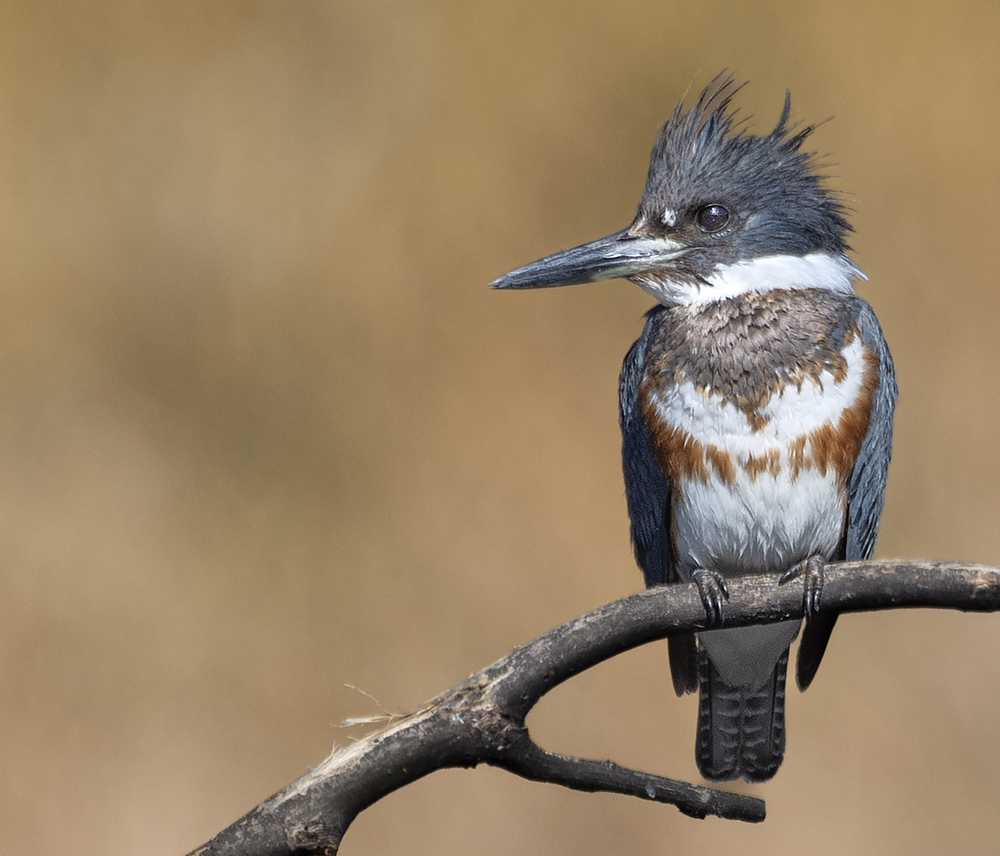
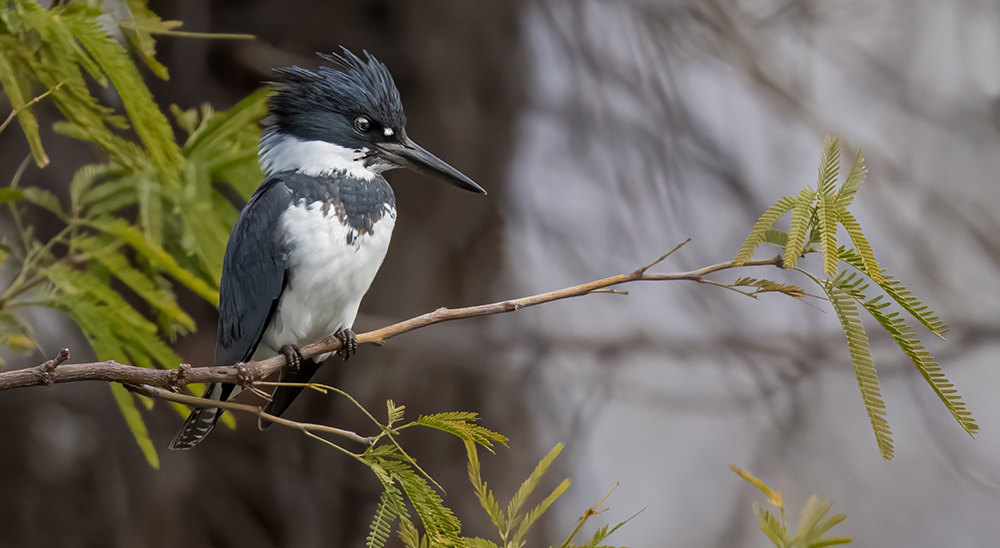
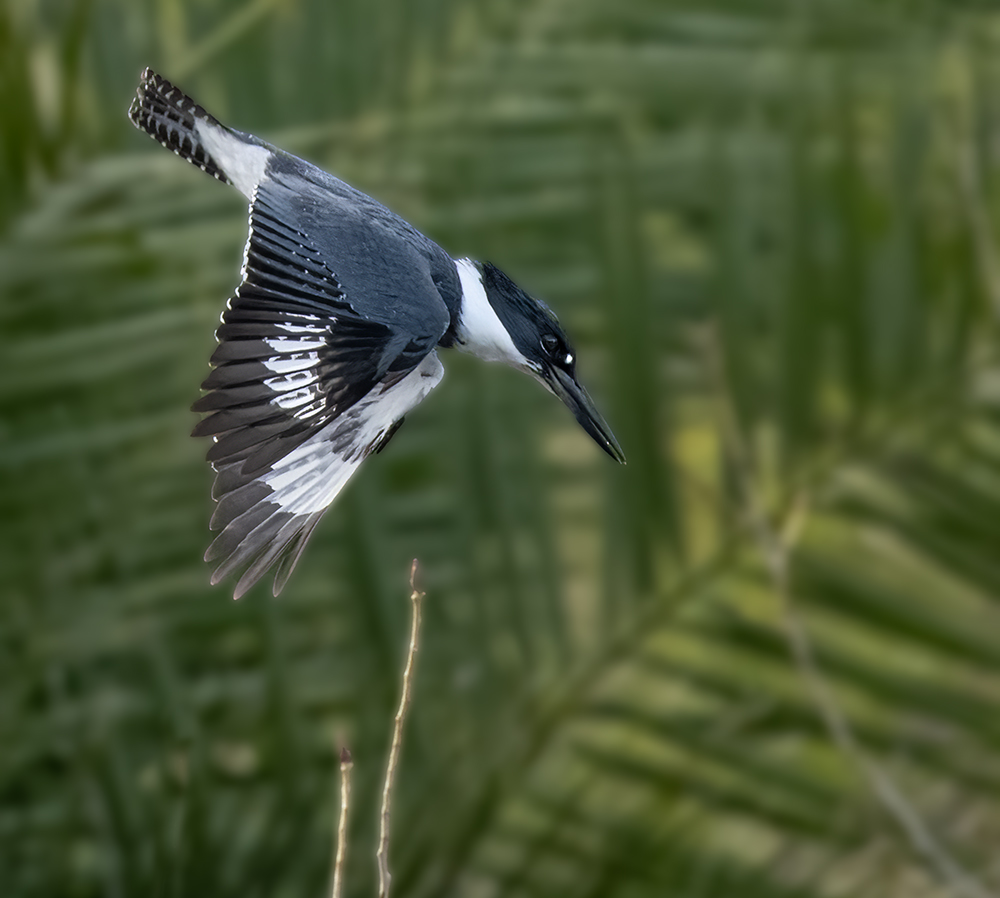
The Belted Kingfisher is a familiar sight along rivers, streams, lakes, and reservoirs throughout Arizona. It is a striking bird with a large head, shaggy crest, and a long daggerlike bill. Adults are bluish-gray above with a white belly, and males show a single blue breast band, while females are more colorful, displaying an additional chestnut band across the belly. This unusual reversal of plumage makes the female brighter than the male, a rare trait among North American birds.
In Arizona, Belted Kingfishers are strongly tied to riparian and aquatic habitats, often perching conspicuously on branches or posts near the water. They hunt by diving headfirst into the water to catch fish and aquatic invertebrates, sometimes hovering briefly before striking. Their presence is often first detected by their loud, rattling call that carries over the water.
The species is present year-round in many parts of the state but is most numerous during winter when northern migrants arrive. Some remain to breed locally, excavating long burrows into earthen banks along waterways, where they nest and raise young. These tunnels may extend several feet into the soil and provide protection from predators.
Although still widespread and fairly common, Belted Kingfishers are sensitive to changes in riparian environments. Alterations to streams, declines in fish populations, and the loss of suitable nesting banks can reduce their numbers.