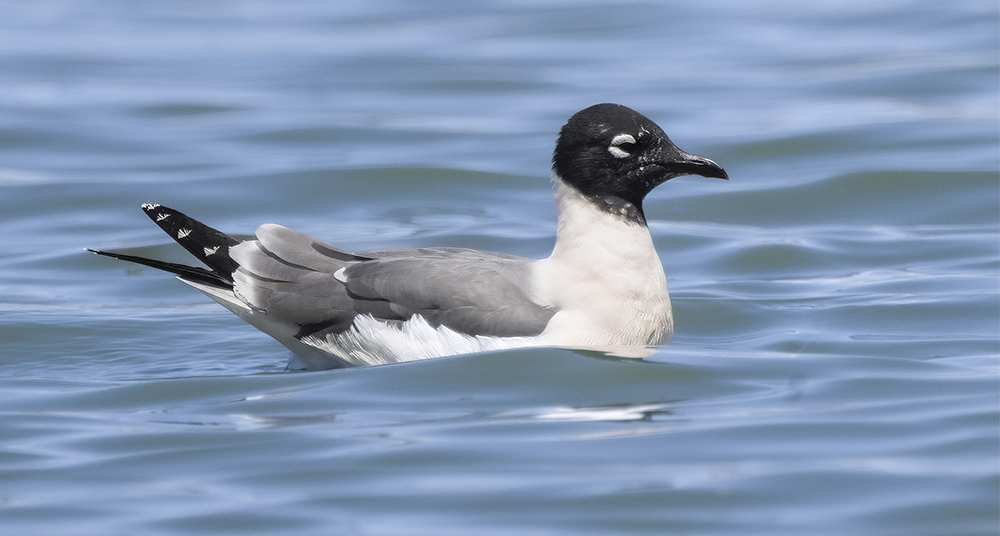
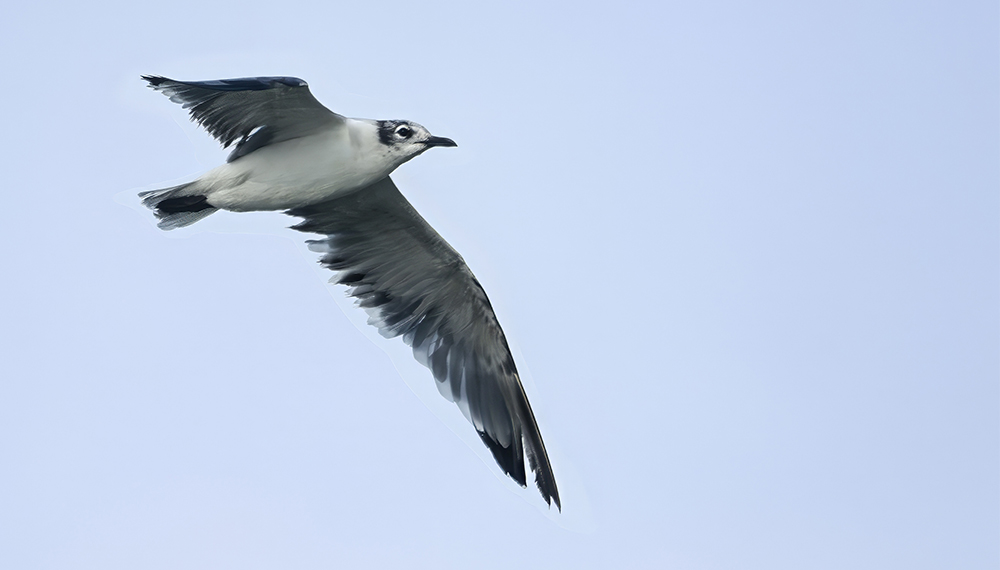
Franklin’s Gull is a striking and rather uncommon visitor to Arizona, primarily observed during migration. These medium-sized gulls breed on inland marshes of central Canada and the northern United States, then migrate long distances to spend the winter along the Pacific coast of South America. In Arizona, they are most often encountered in spring and fall as they stop over on their way between breeding and wintering grounds. Sightings typically occur at large lakes, reservoirs, and flooded agricultural fields where they rest and feed in flocks, sometimes mixed with other gull species.
Franklin’s Gull is easily recognized in breeding plumage by its bold black hood, contrasting white crescents above and below the eye, and bright reddish bill. The upperparts are medium gray, while the underparts are white. In flight, they show a distinctive white trailing edge to the wings. Non-breeding adults lose the hood, retaining only a smudgy dark mask on the head. Juveniles and first-winter birds can be more challenging to identify but still show a slimmer build and more delicate bill compared to other gulls.
These gulls feed opportunistically, taking insects from the water’s surface or foraging in fields and shallow wetlands. In Arizona, observers may spot them hawking flying insects or picking through flooded fields for invertebrates. Though not especially common, Franklin’s Gulls are regular enough in migration that birders across the state keep an eye out for their elegant, buoyant flight and characteristic calls—high-pitched, laughing cries that carry over open water.